

Removing paint protection film (PPF) adhesive can seem hard. But, with the right tools and steps, it’s doable. If you want to take off old PPF, do it carefully to protect your car’s paint.
If you’re new to this, getting help from pros like Shell Shocked Wraps is smart. They know a lot about cars and PPF removal. But, if you’re up for it, this guide will help you do it right. You’ll learn how to remove PPF without damaging your car’s paint.
Key Takeaways
- Understand the importance of properly removing PPF adhesive.
- Learn the step-by-step process for safe removal.
- Discover the tools needed for effective PPF adhesive removal.
- Find out when to seek professional help for PPF removal.
- Explore tips for cleaning your vehicle after PPF removal.
For more on removing PPF, check outthis resource.
Understanding Paint Protection Film Adhesive
It’s key to know about PPF adhesive to remove it safely. This adhesive is made to stick well but not harm your car’s paint. So, taking it off needs care.
What Makes PPF Adhesive Different
PPF adhesive sticks well but is gentle on paint. This makes it hard to remove. It’s made to last through many conditions, like weather changes and chemicals.
Why Adhesive Remains After Removal
Even with careful removal, some adhesive might stay. This could be because it sticks too well or because of wrong removal methods. Knowing why it stays is important for removing it right.
Different Types of PPF Adhesives
There are many kinds of PPF adhesives. Some stick more, others are for certain surfaces. Knowing your adhesive helps pick the right way to remove it.
Tools and Materials You’ll Need
Removing paint protection film adhesive needs careful steps and the right tools. Make sure you have everything ready before starting.
Essential Supplies
- Adhesive Remover: A good paint protection film adhesive remover is key.
- Microfiber Cloths: They are soft on your car and good for cleaning.
- Plastic Razor Blades: They help scrape off tough adhesive without harming the paint.
Optional but Helpful Tools
For tough jobs, think about using a heat gun or a steam cleaner to make the adhesive easier to remove.
Setting Up Your Workspace
Find a bright, clean spot for the job. Make sure your area is free from dirt and dust.
With the right tools and a clean space, you’re ready to remove the paint protection film adhesive well.
Safety Precautions Before You Begin
When you start to remove paint protection film adhesive, safety comes first. This job uses chemicals and methods that can hurt you or damage your car’s paint if not done right.
Protecting Your Vehicle’s Surface
To keep your car’s paint safe, use the right tools and methods. Always test any removal method on an inconspicuous area first. This step lets you see if there are any problems before you use it on the whole surface.
A leading detailer says, “Testing in a hidden area is crucial as it helps prevent unwanted damage to the paint.”
“The key to a successful removal is patience and careful testing.” –
Personal Safety Measures
When you remove paint protection film adhesive, protect yourself with the right gear. Wear gloves to avoid skin irritation and safety glasses to keep your eyes safe from chemicals or debris.
- Wear protective gloves to prevent skin contact with harsh chemicals.
- Use safety glasses to protect your eyes.
- Work in a well-ventilated area to avoid inhaling fumes.
Environmental Considerations
Think about the environment when removing paint protection film adhesive. Dispose of waste properly, and try to use eco-friendly removal products when you can.
| Safety Measure | Importance |
|---|---|
| Protective Gear | High |
| Eco-Friendly Products | Medium |
| Proper Waste Disposal | High |
By following these safety steps, you can safely and effectively remove paint protection film adhesive. This follows tips for removing film adhesive and the best ways to clean up paint protection film residue.
Preparing Your Vehicle for Adhesive Removal
Before you start removing the paint protection film adhesive, it’s crucial to prepare your vehicle properly. This step ensures that the removal process is smooth and doesn’t damage your car’s paint.
Cleaning the Surface
Start by cleaning the surface where the adhesive is located. Use a mild soap and water to remove any dirt or debris. This helps in getting a clear view of the adhesive and prevents any dirt from getting stuck in the adhesive removal process.
Testing in an Inconspicuous Area
Before applying any removal method, test it in an inconspicuous area of your vehicle to ensure it doesn’t damage the paint. This step is crucial for avoiding any unwanted discoloration or damage.
Identifying Problem Areas
Inspect the adhesive closely to identify any problem areas that might require extra care. Look for areas where the adhesive is very stubborn or where the paint is sensitive.
By following these steps, you’ll be well-prepared to remove the paint protection film adhesive from your car effectively.
How to Remove Paint Protection Film Adhesive Using Heat
Heat is great for removing paint protection film adhesive. It softens the adhesive, making it easy to take off without harming the paint.
Heat Gun Method
A heat gun is a top choice for removing adhesive. Use a low or medium setting to avoid too much heat. Hold the gun a few inches away and move it slowly to spread the heat evenly.
Hair Dryer Technique
If you don’t have a heat gun, a hair dryer works too. Use it on high, keeping it a few inches away. Move it back and forth to avoid hot spots.
Temperature Control Tips
It’s important to keep the heat right when removing adhesive. Aim for 150°F to 200°F (65°C to 90°C). Too hot can harm the paint or spread the adhesive.
Steam Removal Option
Steam is also good for removing adhesive. A steam cleaner can help loosen it. But, be careful not to use too much steam to avoid water spots.
Here’s how different heat methods compare:
| Method | Effectiveness | Risk of Damage |
|---|---|---|
| Heat Gun | High | Medium |
| Hair Dryer | Medium | Low |
| Steam | High | Low |
Chemical Solutions for Adhesive Removal
Chemical solutions can help dissolve and remove paint protection film adhesive. They make it easier to get rid of stubborn adhesive residue.
Isopropyl Alcohol Method
Isopropyl alcohol is good for removing adhesive. Put it on a microfiber cloth and rub the area. It breaks down the adhesive, making it easy to remove.
Citrus-Based Removers
Citrus-based removers are also effective. They are made from citrus and safe for most surfaces. Apply it, wait a few minutes, then wipe with a microfiber cloth.
Clay Bar Technique
The clay bar technique is gentle and effective. It’s a good way to remove adhesive residue.
Application and Removal Process
To use a clay bar, clean and spray the surface. Then, rub the clay bar over the adhesive. It will pick up the adhesive, leaving the surface clean.
| Chemical Solution | Effectiveness | Safety |
|---|---|---|
| Isopropyl Alcohol | High | Generally safe, but may dry out skin |
| Citrus-Based Removers | Medium to High | Safe for most surfaces, gentle on skin |
| Clay Bar | High | Very safe, gentle on surfaces |
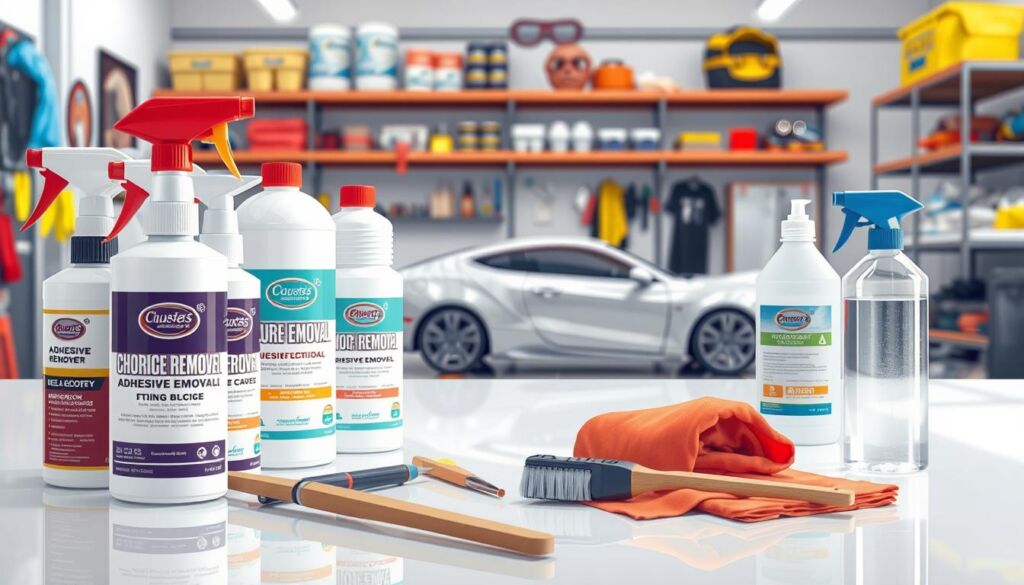
Choosing the right chemical solution helps remove adhesive without harming your car. Always test a small area first. This ensures the solution doesn’t damage or discolor your car.
Mechanical Methods for Stubborn Adhesive
When dealing with stubborn paint protection film adhesive, mechanical methods can be very helpful. These methods use tools and materials to remove the adhesive residue.
Microfiber Cloth Technique
Using a microfiber cloth is a gentle way to remove adhesive. Rub the area gently with the cloth to loosen and remove the residue. This works well for small spots.
Plastic Razor Blade Method
A plastic razor blade can help with tough adhesive. Hold it shallow to avoid hurting the paint.
Avoiding Paint Damage
To avoid damaging the paint, make sure the blade is clean and dry. Work slowly and carefully.
Adhesive Removal Pads
Adhesive removal pads are also good for tough adhesive. They pick up residue without scratching or marking.
By using these methods carefully, you can remove stubborn paint protection film adhesive from your car’s surface.
Step-by-Step Process for Complete Adhesive Removal
To remove paint protection film adhesive, follow this guide. It’s key to keep your car’s paint looking good.
Initial Removal Phase
Start by heating the adhesive with a heat gun or hair dryer. This makes it softer and easier to take off. Don’t overheat it to avoid harming the paint.
After heating, use a plastic razor blade or a special tool to gently scrape it off. Move slowly to avoid scratching the paint.
Dealing with Residue
After taking off most of the adhesive, some residue might stay. Use a microfiber cloth with isopropyl alcohol or citrus-based remover to clean it. This will help remove the leftover bits.
For tough residue, a clay bar might be needed. It safely removes the remaining bits without hurting the paint.
Final Cleaning
After removing the adhesive and residue, wash the area with soap and water. Dry it with a microfiber towel to avoid water spots.
Polishing Techniques
To make the paint shine and remove small scratches, use a polishing compound. You can apply it with a dual-action polisher or by hand with a microfiber pad.
Here’s a quick comparison of different polishing techniques:
| Technique | Effectiveness | Ease of Use |
|---|---|---|
| Dual-Action Polisher | High | Moderate |
| Hand Polishing | Moderate | Easy |
By following these steps, you can remove PPF adhesive and make your car’s paint look new again.
Troubleshooting Common Adhesive Removal Problems
Removing paint protection film adhesive can be tricky. It’s important to know how to fix common issues. You might face problems that make the job harder.
Dealing with Aged Adhesive
Aged adhesive is hard to remove. A paint protection film adhesive remover can help. These products break down the adhesive, making it easier to take off.
Removing Adhesive from Different Surfaces
Each surface needs a special way to remove adhesive. For example, matte finishes need extra care to not harm them.
Special Considerations for Matte Finishes
When working with matte finishes, be gentle. Avoid harsh chemicals or rough materials. Use a soft cloth and a mild remover instead.
Addressing Discoloration
Discoloration can happen if the adhesive stays on too long. It can also damage the paint. Use a detailing product to fix the color and finish.
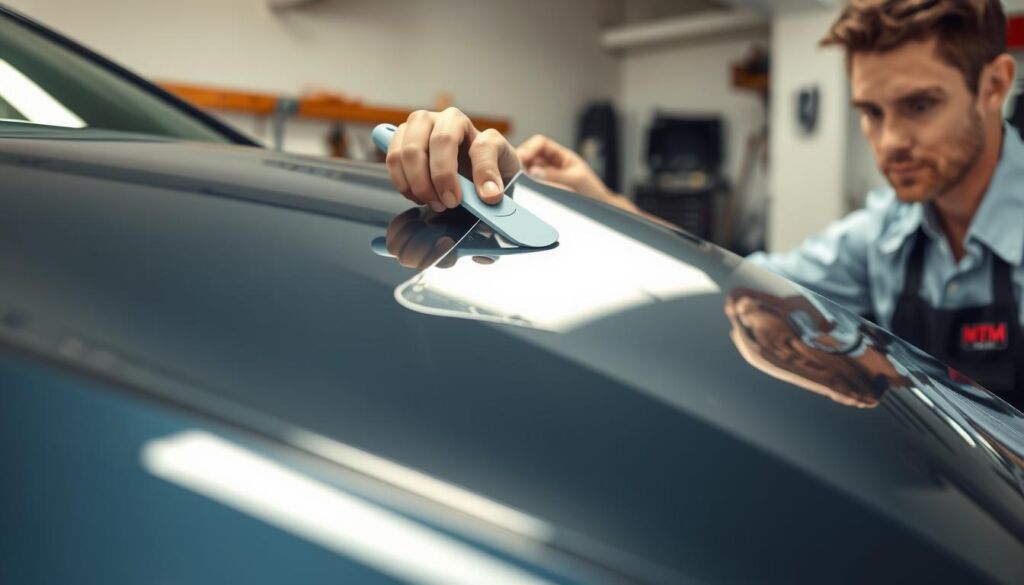
Knowing how to solve these problems helps keep your car looking good. It makes removing paint protection film adhesive easier.
Professional Services at Shell Shocked Wraps
Shell Shocked Wraps has expert PPF adhesive removal services. Their team uses the latest tools and methods. They make sure the removal is safe and effective.
When DIY Isn’t Enough
Even with your best DIY tries, sometimes it’s hard to remove paint protection film adhesive fully. Getting professional help is smart to avoid hurting your car’s paint.
Shell Shocked Wraps’ Expert Removal Process
Shell Shocked Wraps carefully removes PPF adhesive. They inspect, remove, and detail your car to make it look great.
Additional Vehicle Protection Services
Shell Shocked Wraps also protects your car in other ways. They offer:
- New PPF installation to shield your car’s paint
- Ceramic coatings for extra protection and shine
Ceramic Coatings and New PPF Installation
Ceramic coatings add extra protection against the environment. New PPF installation keeps your car’s paint perfect. Shell Shocked Wraps’ experts help you choose the best for your car.
If you’re near Wylie, TX, visit Shell Shocked Wraps at 1143 Bozman Rd, Building 4-402, Wylie, TX 75098. Or call 972-439-1411 to book your service.
| Service | Description |
|---|---|
| PPF Adhesive Removal | Expert removal of paint protection film adhesive |
| Ceramic Coatings | Durable coatings for enhanced vehicle protection |
| New PPF Installation | Professional installation of paint protection film |
Conclusion: Protecting Your Paint After Adhesive Removal
After removing the Paint Protection Film adhesive, it’s important to protect your car’s paint. This keeps it looking good. Follow some easy steps to remove film adhesive and clean up residue.
First, make sure the surface is clean and free of any leftover adhesive. Use a mild soap and water to clean it. Then, dry it well with a microfiber cloth.
For extra protection, apply a paint sealant or wax to the clean surface. This keeps the paint safe from the environment and shiny.
Don’t forget about regular care. Wash and wax your car often to keep the paint in top shape. Also, think about putting Paint Protection Film back on where it’s needed. These steps will help your car’s paint stay beautiful.