

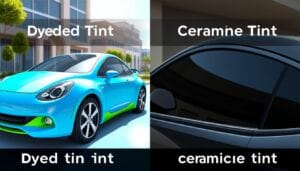
Choosing between dyed window tint and ceramic window tint is a big decision. At Shell Shocked Wraps, we offer top-notch materials and know-how. The right tint can change your drive, from blocking heat to protecting from UV rays.
It’s important to know the differences between these two options. For more info, check out ceramic vs dyed tint. It shows what each has to offer.
Key Takeaways
- Understand the primary differences between dyed and ceramic window tints.
- Learn about the benefits of each type of tint.
- Discover how Shell Shocked Wraps can help you choose the right tint for your vehicle.
- Explore the long-term value and durability of ceramic tint.
- Find out how to make an informed decision based on your needs.
Understanding Window Tint Basics
Thinking about tinting your windows? It’s key to know the basics first. Window tinting adds a thin film to your car’s windows. It blocks sunlight, cuts down heat, and boosts privacy.
What Is Window Tinting?
Window tinting puts a thin, sticky film on your car’s glass. This film stops some light from getting in. It also blocks UV rays and heat.
Why People Choose to Tint Their Windows
Many reasons why people tint their windows include:
- Improved looks: Tinted windows make your car look sleek and modern.
- Less heat: Tinting cuts down heat, making your car cooler.
- UV protection: Tints with UV protection help keep your car’s interior from fading.
The Evolution of Window Tinting Technology
Window tinting tech has grown a lot over time. New materials and ways to make them have improved it.
New ceramic tints are better at blocking heat and UV rays than old tints.
Dyed Window Tint: A Closer Look
Dyed window tint is popular for cars. It’s cheap and gives windows a cool look. The tint is made by adding dye to the film. This dye absorbs light, making the windows darker.
How Dyed Tint Is Made
To make dyed tint, dye is added to the film. This makes the tint darker and more colorful. The dye spreads evenly, giving a consistent look.
The Science Behind Dyed Tint
Dyed tint works by blocking light. The dye in the film catches certain light waves. This blocks more light, giving privacy and less glare.
Common Applications for Dyed Tint
People use dyed tint for cars because it’s cheap. It also makes windows look cool. It’s also used in homes and offices for a darker look.
When you compare dyed vs ceramic window film, dyed tint is cheaper. But ceramic tint blocks more heat and UV rays. Knowing the dyed tint vs ceramic tint cost helps you choose what’s best for you.
Ceramic Window Tint Explained
Ceramic tint is different from old window tints. It uses tiny ceramic particles to block heat and UV rays. This keeps your view clear and your car cool.
What Makes Ceramic Tint Different
Ceramic tint is special because it doesn’t use dyes or metals. These can fade or mess with signals. Instead, it uses ceramic particles to keep your car cool and protect it from UV rays.
The Technology Behind Ceramic Particles
The ceramic particles in this tint are very small. This lets them block radiation well. It keeps your car’s electronics safe and makes the tint last longer.
Why Ceramic Has Gained Popularity
The benefits of ceramic tint are many. It blocks heat, protects from UV rays, and stops interior parts from fading. Plus, it’s very durable. This makes it a top choice for car owners who want a good tint.
Dyed vs Ceramic Tint: Head-to-Head Comparison
Choosing the right window tint for your car is important. Knowing the difference between dyed and ceramic tint helps a lot. Each type affects your driving in different ways.
Visual Appearance Differences
Dyed tint looks darker because of the dye. It makes your car look sleek. Ceramic tint, on the other hand, looks more natural. It lets you see clearer.
Performance Variations
Performance matters a lot. Ceramic tint beats dyed tint in blocking heat. It keeps your car cooler by blocking infrared radiation.
Longevity Comparison
Ceramic tint lasts longer than dyed tint. Dyed tint fades over time, losing its effect. Ceramic tint stays strong and doesn’t fade easily.
Signal Interference Considerations
Signal interference is another thing to think about. Ceramic tint doesn’t mess with signals like GPS or phones. Dyed tint might cause problems if it’s too thick or certain types.
| Feature | Dyed Tint | Ceramic Tint |
|---|---|---|
| Heat Rejection | Moderate | High |
| Lifespan | 3-5 years | 5-10 years |
| Signal Interference | Possible | Minimal |
In conclusion, ceramic tint is better for heat blocking and lasting longer. It’s a good choice for many car owners.
Heat Rejection Capabilities
Knowing how window tint blocks heat is key. It helps keep your car cool and can save fuel. This is important for comfort and saving money.
How Dyed Tint Blocks Heat
Dyed tint absorbs heat, but it gets hot too. This can make your car warmer. Dyed tint blocks some heat, but not as much as other types.
Ceramic Tint’s Superior Heat Rejection
Ceramic tint reflects solar radiation. This keeps your car cooler. It rejects up to 50% more heat than dyed tint.
Real-World Temperature Differences
In hot places, cars with ceramic tint stay cooler. This makes driving more comfortable. It also makes your AC work less hard.
Fuel Efficiency Benefits
Ceramic tint also saves fuel. It reduces AC work, which means less fuel used. Studies show cars with ceramic tint use less fuel, even in the heat.
| Tint Type | Heat Rejection | Fuel Efficiency Impact |
|---|---|---|
| Dyed Tint | Moderate | Minimal |
| Ceramic Tint | High | Noticeable |
Learn more about dyed and ceramic tint at Shell Shocked Wraps.
UV Protection and Interior Preservation
UV protection is key in window tinting. It helps keep your car’s inside and your health safe. Dyed and ceramic tints block UV rays, but ceramic tints do it better.
UV Blocking in Dyed Tints
Dyed tints block up to 99% of UV rays. This stops your car’s inside from fading. But, they fade over time.
Enhanced UV Protection with Ceramic
Ceramic tints block up to 99.9% of UV rays. They stay strong longer than dyed tints. Ceramic particles don’t fade like dyes.
Protecting Your Skin and Vehicle Interior
UV protection keeps your skin safe from harm. It stops skin damage and cancer risk. A good window tint helps a lot.
Fading Prevention for Upholstery and Dashboards
Fading prevention is a big plus. UV rays cause your car’s inside to age fast. But, a good tint keeps it looking new.
In short, ceramic tints are better for UV protection. They last longer and protect you and your car better.
Durability and Lifespan Expectations
When picking window tint, how long it lasts is key. It affects your car’s safety and looks. The type of tint you pick matters a lot.
How Long Dyed Tint Typically Lasts
Dyed tint doesn’t last as long as ceramic tint. It can last 2 to 5 years. This depends on the tint’s quality and how you take care of it.
Things like sunlight, how you clean it, and the install quality matter a lot.
Ceramic Tint’s Extended Lifespan
Ceramic tint lasts a lot longer. It can last up to 10 years or more. Its advanced tech makes it very durable.
It fights off fading and bubbling well. This keeps your car’s windows safe and looking good for a long time.
Factors Affecting Tint Longevity
Many things can change how long your tint lasts. These include:
- Quality of the tint material
- Professional installation
- Exposure to UV rays
- Cleaning and maintenance practices
Shell Shocked Wraps’ 1-Year No-B.S. Warranty
At Shell Shocked Wraps, we trust our tints. That’s why we have a 1-Year No-B.S. Warranty. This shows we’re sure our tints are good and will last.
Experts say, “A good window tint is not just about looks; it’s about lasting and protecting.” Picking the right tint and getting it installed right makes a big difference.
Professional Installation: Why It Matters
For a perfect window tinting job, you need a pro. DIY kits might look easy, but they don’t last as long as a pro’s work.
Common DIY Pitfalls to Avoid
DIY can cause bubbles, unevenness, and wrong cuts. These problems mess up your car’s look and tint’s work.
The Shell Shocked Wraps Precision Difference
Shell Shocked Wraps knows how to tint windows right. Their team uses top materials and methods for a perfect job. “The difference between a DIY job and a professional installation is like night and day,” says a happy customer.
What to Expect During Professional Installation
Expect a detailed talk to pick the right tint. Then, they’ll measure and cut it carefully. They’ll apply it with care for a smooth finish.
Post-Installation Care Tips
To keep your tint looking good, clean it gently. Use a soft cloth and mild soap. This care will make your tint last longer and stay nice.
Cost Analysis: Is Ceramic Worth the Premium?
Ceramic window tint is seen as the top choice, but is it worth the extra money? When picking tint for your car, knowing the cost of dyed versus ceramic is key. The price gap between these tints is big, and it’s important to think about the short and long-term costs.
Typical Price Ranges for Dyed Tint
Dyed tint is cheaper, costing $100 to $300 for a car. This makes it a good pick for those watching their budget. But, dyed tint doesn’t last as long as ceramic and might need to be replaced more often.
Ceramic Tint Pricing Explained
Ceramic tint is pricier, costing $300 to $800 or more, based on quality and brand. Its advanced tech and better performance make it worth the extra cost. It offers better heat blocking, UV protection, and lasts longer, making it a smart choice for many.
Long-Term Value Considerations
Ceramic tint might cost more at first, but it lasts longer and works better. It saves energy by blocking more heat and might need to be replaced less often. This makes it a good deal in the long run.
Investment Return Through Vehicle Protection
Choosing ceramic tint can protect your car and save money. It blocks UV rays and keeps your car’s interior cool, which helps keep your car in good shape. This protection can save you money on repairs and upkeep over time.
In short, when looking at dyed versus ceramic tint costs, think about both the initial price and long-term benefits. Ceramic tint might cost more at first, but its lasting quality and performance make it a better deal in the long run.
Making the Right Choice for Your Vehicle
When thinking about tinting your car’s windows, think about dyed vs ceramic tint. Your choice should depend on your budget, how you drive, and where you live.
When Dyed Tint Makes Sense
Dyed tint is cheaper and still looks good. It blocks some heat. If you’re watching your money or want a certain color, dyed tint is a good pick.
When to Invest in Ceramic Tint
Ceramic tint is better for hot places or lots of driving. It blocks more heat and UV rays. This makes driving cooler and keeps your car’s inside nice.
Considering Your Climate and Driving Habits
Where you live and how you drive matter a lot. For example, in sunny places like Arizona or California, ceramic tint’s heat blocking is a big plus.
Consultation Services at Shell Shocked Wraps
At Shell Shocked Wraps, our experts can help you decide. We offer advice to fit your needs. Our team will help you pick between dyed and ceramic tint for your car.
| Feature | Dyed Tint | Ceramic Tint |
|---|---|---|
| Cost | Lower upfront cost | Higher upfront cost |
| Heat Rejection | Moderate | Superior |
| UV Protection | Good | Excellent |
Think about what you need and talk to experts. Whether you choose dyed or ceramic tint, pick what makes driving better for you.
Conclusion: The Clear Winner Between Dyed and Ceramic Tint
Choosing the best window tint for your car is a big decision. It depends on how well it works, how long it lasts, and the cost. Ceramic tint beats dyed tint in these areas.
Ceramic tint blocks up to 80% of heat. Dyed tint only blocks 50%. Ceramic also protects better from UV rays, stopping up to 99% of them.
Even though ceramic tint costs more at first, it saves money in the long run. It helps your car’s AC work less, saving energy. Plus, it makes your car’s interior last longer.
For the best tint that keeps heat out and lasts long, choose ceramic. For expert installation and quality ceramic tint, call Shell Shocked Wraps. See the difference for yourself.
