

Removing Paint Protection Film (PPF) needs care to not harm your car’s paint. If you want to do it yourself, knowing the right steps is key to avoid expensive fixes.
At Shell Shocked Wraps, they know how to remove PPF safely. They are experts in car customizing, like ceramic coatings and vinyl wraps. You can find them at 1143 Bozman Rd, Building 4-402, Wylie, TX 75098. Call them at 972-439-1411 for help.
To remove PPF safely, you need to heat it, then peel it off. After that, you must get rid of any leftover glue. Doing it right keeps your car’s paint safe and looking good.
Key Takeaways
- Safe PPF removal is key to not damage your car’s paint.
- Heating the film is a big part of removing it.
- Peeling off the film carefully is important to avoid scratches.
- Getting rid of leftover glue needs the right methods.
- Think about getting professional help if you’re not sure.
Understanding Paint Protection Film and Its Lifecycle
If you’ve put paint protection film on your car, you should know how it works and when to take it off. Paint protection film (PPF) is a clear film that covers your car’s outside. It keeps the paint safe from scratches, chips, and small scrapes.
What is Paint Protection Film?
PPF is like a shield for your car’s paint. It takes hits that could hurt your car’s paint. It’s put on places like the front bumper, hood, and side mirrors.
Why Proper Removal Matters for Your Vehicle
Removing PPF the right way is key to keeping your car looking good. The wrong way can leave sticky stuff, hurt the paint, or even take off the paint. Knowing how to remove it right keeps your car’s paint looking new.
The Typical Lifespan of Quality PPF
How long PPF lasts depends on its quality, the weather, and how well you take care of it. Good PPF can last 5 to 10 years. Things like sunlight, weather, and how you wash your car can make it last longer or shorter.
| PPF Quality | Lifespan | Factors Affecting Durability |
|---|---|---|
| High | 5-10 years | Sunlight exposure, weather conditions |
| Medium | 3-7 years | Washing practices, environmental factors |
| Low | 1-5 years | Poor maintenance, harsh weather |
Knowing how long your PPF lasts and how to remove it when needed helps keep your car looking great. It also helps keep its value when you sell it.
Signs It’s Time to Remove Your Paint Protection Film
Your paint protection film doesn’t last forever. Knowing when to remove it is important for your car’s look. As your PPF gets older, you’ll see signs it’s time to take it off.
Visual Indicators of Aging PPF
One clear sign is when your PPF starts to look bad. This can happen in a few ways:
- Yellowing or discoloration
- Cracking or crazing
- Lifting at the edges or corners
Performance Degradation Signs
There are also signs that your PPF isn’t working as well as it used to. Look out for:
- Reduced clarity or visibility through the film
- Increased susceptibility to damage from contaminants
- Loss of adhesive properties, leading to peeling or bubbling
Seasonal Considerations for Removal
When you remove your PPF can depend on the season. Extreme weather can change how easy it is to remove. For example, cold weather can make the film break more easily.
| Season | Considerations for PPF Removal |
|---|---|
| Summer | Heat can soften the adhesive, making removal easier but potentially causing it to stretch or tear. |
| Winter | Cold temperatures can make the film more brittle, increasing the risk of cracking during removal. |
Tools and Materials Needed for Safe PPF Removal
Removing paint protection film (PPF) yourself needs the right tools and materials. It’s important to use the right stuff. This makes the job easier and keeps your car’s paint safe.
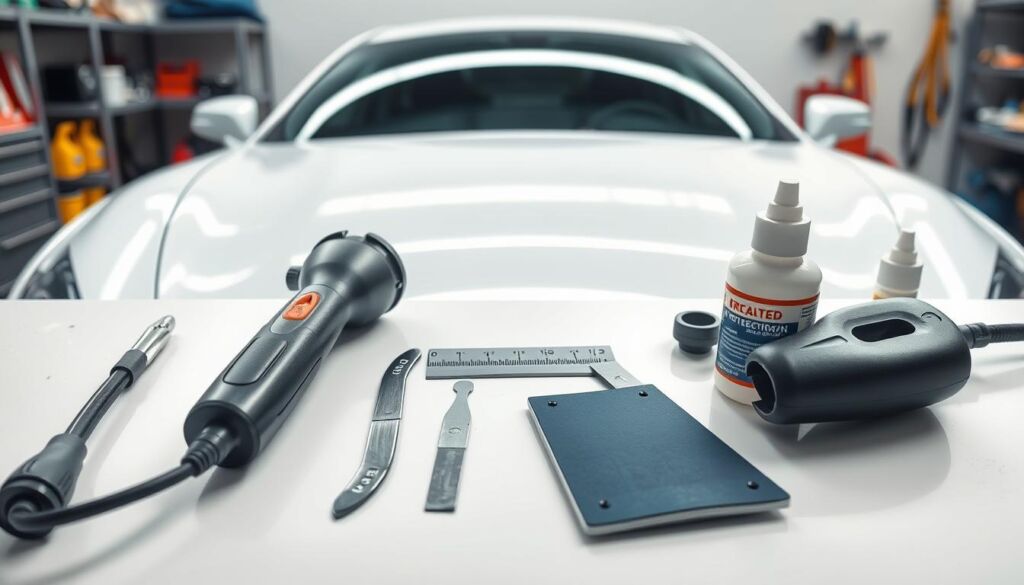
Essential Tools for DIY Removal
You’ll need some essential tools to get started. A heat gun is key to soften the adhesive. This makes the film easier to remove without harming your car’s paint.
Use a plastic razor blade to carefully lift the film. An adhesive remover will help get rid of any leftover glue. Microfiber cloths are great for cleaning the area.
Recommended Cleaning and Preparation Products
Cleaning your car well is important before and after PPF removal. Use a high-quality car wash soap and microfiber towels to clean without scratching. For tough dirt or glue, a special car paint cleaner works best.
Safety Equipment to Protect Yourself and Your Vehicle
When removing PPF, safety comes first. Wear protective gloves to avoid skin problems from chemicals. Safety glasses protect your eyes from flying debris or spills.
Make sure your work area has good air flow. This is important when using chemical removers.
Preparing Your Vehicle Before Attempting PPF Removal
Before you remove the paint protection film (PPF) from your car, get it ready carefully. This means knowing the best time to remove it, cleaning it well, and keeping other parts safe.
Ideal Environmental Conditions for Removal
The place you remove PPF matters a lot. It’s best to do it in the shade or on a cloudy day. This keeps the sun’s heat away from the adhesive. The best temperature is between 60°F to 80°F (15°C to 27°C). Don’t remove PPF in very cold or hot weather, as it can mess with the adhesive.
Proper Vehicle Cleaning Procedures
Cleaning your car before removing PPF is key. First, wash it with a gentle soap and dry it completely. This makes sure the surface is clean and ready for removal. For more tips, check out this guide on paint protection film removal.
Protecting Surrounding Components and Trim
To avoid harming nearby parts and trim, use masking tape around the PPF. This includes trim, moldings, and any other delicate areas. Also, lay down a protective cover on the ground to catch any leftover adhesive or debris.
| Preparation Step | Description |
|---|---|
| Ideal Environmental Conditions | Remove PPF in shaded areas or on cloudy days, between 60°F to 80°F (15°C to 27°C) |
| Vehicle Cleaning | Wash with mild soap and dry thoroughly |
| Protecting Surrounding Components | Use masking tape on adjacent trim and moldings, and a protective cover on the ground |
How to Remove Paint Protection Film: Step-by-Step Guide
Wondering how to remove paint protection film without harming your car’s paint? You’re in the right spot. Removing paint protection film (PPF) needs care to avoid harming your car’s finish. We’ll guide you through the steps and techniques needed.
Testing Your Removal Method on a Small Area
Before removing the paint protection film, test your method on a small area first. This step ensures your chosen method won’t harm the paint. Choose a small part of the PPF, apply your method, and check the results.
The Heat Method for Film Removal
The heat method is a common way to remove PPF. It uses heat to loosen the adhesive, making it easy to peel off the film.
Heat Gun Techniques and Safety
When using a heat gun, keep it 6 inches away from the surface. This avoids overheating, which can damage the paint. Move the heat gun slowly to spread the heat evenly.
Safety Precautions:
- Wear protective gloves to prevent burns.
- Ensure good ventilation to avoid inhaling fumes.
- Keep the heat gun away from flammable materials.
Steam Removal Process
Steam can also loosen the adhesive. Use a steam cleaner to apply steam to the film, then gently peel off the PPF. This method is gentler than a heat gun and works well for delicate surfaces.
The Chemical Method for Film Removal
The chemical method uses solvents or adhesive removers to dissolve the adhesive. This makes it easier to remove the PPF.
Safe Solvents and Application
Choose a solvent safe for your vehicle’s paint. Apply it to the film’s edge and let it seep under. Then, gently peel off the film, working slowly to avoid residue.
Working with Adhesive Removers
Adhesive removers can remove stubborn residue. Apply the remover, wait a few minutes, and then wipe it off with a microfiber cloth.
Comparison of Removal Methods:
| Removal Method | Effectiveness | Safety Considerations |
|---|---|---|
| Heat Method | High | Risk of overheating paint |
| Chemical Method | High | Risk of chemical damage to paint if not chosen correctly |
| Steam Method | Medium to High | Gentle on paint, but may require more effort |
By following these steps and choosing the right method, you can safely remove paint protection film from your vehicle. Work patiently and carefully to avoid damaging the paint.
Common Mistakes to Avoid During PPF Removal
Removing PPF from your car can be tricky. You need to know what to avoid to do it right. This way, you won’t damage your car’s paint.
Heat-Related Damage Risks
Too much heat is a big mistake. It can harm your car’s paint or make it look bad. Use a heat gun or hair dryer carefully. Keep the heat low and move it a lot to avoid burning any spot.
Chemical Exposure Concerns
Using the wrong chemicals can also cause problems. Some can ruin your paint or hurt other parts. Always check the instructions first. Test any cleaning or removal product on a small, hidden area.
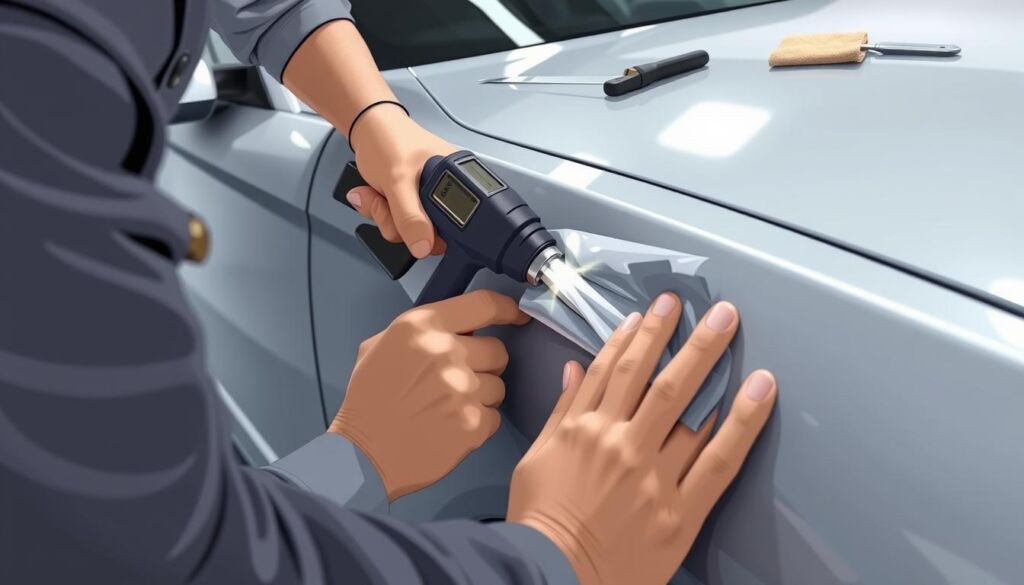
Improper Tool Usage Issues
Wrong tools can scratch your paint or leave marks. Use plastic scrapers or credit cards to remove the film gently. Avoid metal tools that can scratch. For tough spots, think about getting a professional PPF removal service to avoid damage.
Rushing the Process: Why Patience Matters
Rushing can lead to mistakes and damage. Take your time to remove the film carefully. Work in small sections and use the right techniques for your car. Being patient is key to a successful removal.
| Common Mistake | Potential Damage | Prevention Tip |
|---|---|---|
| Excessive Heat | Paint damage or discoloration | Use low heat and move the heat gun constantly |
| Wrong Chemicals | Paint damage or component harm | Read instructions and test on a small area first |
| Improper Tools | Scratches or residue | Use plastic scrapers or credit cards |
Knowing these common mistakes helps you avoid problems. Take the right steps to remove PPF safely. For tricky situations or if you’re unsure, get help from a professional. They can give you tips for removing PPF and help with the paint protection film removal process.
Tackling Difficult Removal Situations
Removing paint protection film from your car can be tough. You might face problems like old film, sticky residue, and car-specific issues.
Removing Aged or Deteriorated Film
Old paint protection film is harder to take off. It can get brittle and crack. Use a little heat to soften it, then remove it in big pieces.
Dealing with Stubborn Adhesive Residue
After removing the film, you might see sticky stuff left behind. Use a special cleaner or soap and water to get rid of it. Clean it gently with a soft cloth to protect the paint.
Vehicle-Specific Removal Challenges
Every car is different when it comes to removing film. Cars with tricky shapes or sensitive paint need extra care.
Curved Surfaces and Complex Areas
For curved parts, be flexible to avoid harm. Warm the film with a heat gun to make it easier to shape.
Delicate Paint Finishes
Be gentle with cars that have soft paint. Don’t use strong cleaners or rough tools. Use mild products and soft cloths instead.
| Removal Challenge | Recommended Solution |
|---|---|
| Aged or Deteriorated Film | Gentle heat application |
| Stubborn Adhesive Residue | Specialized adhesive remover or soap mixture |
| Curved Surfaces | Flexible removal approach with heat gun |
| Delicate Paint Finishes | Mild removal products and soft cloths |
Professional PPF Removal Services at Shell Shocked Wraps
Trust the experts at Shell Shocked Wraps for PPF removal. We treat your vehicle with care and precision.
Benefits of Expert Removal vs. DIY
DIY removal might save money but can harm your car’s paint. Our team at Shell Shocked Wraps uses specialized tools and techniques. This keeps your paint safe and looks flawless.
Our Specialized Removal Process
We use heat and specialized chemicals to remove PPF safely. We focus on every detail to ensure precision.
| Removal Method | Benefits |
|---|---|
| Heat Method | Loosens adhesive for easy removal |
| Chemical Method | Breaks down adhesive for safe removal |
What to Expect When You Visit Our Wylie, TX Location
At our Wylie, TX location, you’ll meet a friendly team. We’ll help you through the removal process, keeping you informed.
Post-Removal Protection Options
After removing PPF, we offer protection options. Choose from new PPF installation or other coatings to keep your car looking great.
Conclusion: Ensuring Your Vehicle Looks Its Best After PPF Removal
Now you know how to safely remove paint protection film. It’s important to keep your vehicle looking great. After removing PPF, your car’s paint might get dirty or have leftover glue.
Use a mild soap and water to clean it well. This will help keep your car’s paint shiny.
When you remove PPF yourself, check the paint for glue or damage. If you find glue, use a gentle remover to get rid of it. Then, think about putting a protective coat on your car’s paint. This will help protect it from the weather and keep it shiny.
By following the tips in this article, you’ve started to keep your car looking good. Taking care of your car’s paint will make it last longer. This way, your car will stay looking new for many years.