

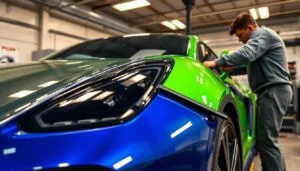
As a car owner, you know how important it is to keep your vehicle looking good. One great way to do this is by using Paint Protection Film (PPF). Shell Shocked Wraps is a family-run, veteran-owned company. They specialize in precision wraps, PPF, ceramic coatings, and window films.
PPF is a clear, very strong film that protects your car’s paint. Shell Shocked Wraps uses top-notch materials and offers amazing customer service. They even give you a 1-year no-B.S. warranty, so you can relax.
Key Takeaways
- Understand the benefits of Paint Protection Film for your vehicle.
- Learn about the expertise of Shell Shocked Wraps in PPF solutions.
- Discover the importance of high-quality materials and customer service.
- Find out about the 1-year warranty offered by Shell Shocked Wraps.
- Explore how PPF can protect your car’s painted surfaces.
Table of Contents
ToggleWhat Is Paint Protection Film?
Paint Protection Film, or PPF, is a clear layer for your car’s paint. It keeps it safe from damage. It’s made from a strong material called thermoplastic polyurethane (TPU). This makes it flexible, clear, and strong, perfect for keeping your car’s paint looking new.
The Science Behind PPF
PPF works well because of its special mix and tech. It catches road debris, stops scratches, and blocks UV rays. This keeps your car looking great.
Self-Healing Properties Explained
PPF has a cool feature: it can heal itself. Small scratches and swirls can go away with heat. This makes the film look new again.
How PPF Differs from Other Protection Methods
PPF is different from other ways to protect your car. Like ceramic coatings and waxes. These methods protect the paint, but PPF creates a strong barrier.
Comparing PPF to Ceramic Coatings and Waxes
Ceramic coatings and waxes protect the paint in a chemical way. But PPF gives a physical shield that’s stronger.
Knowing what makes PPF special helps you decide if it’s right for your car. Getting it installed by a pro makes sure it works best.
The History and Evolution of Paint Protection Film
Paint protection film started in the military. Now, it’s a key part of car care. Its growth shows how well it works and lasts.
Military Origins to Automotive Application
The military first used it to shield helicopter blades and gear. Then, car lovers started using it to protect car paints. Now, vehicle paint protection film helps keep cars looking good and valuable.
Technological Advancements in Modern PPF
New tech has made paint protection films better. They are now stronger, more flexible, and clearer.
How Today’s Films Outperform Earlier Generations
Today’s films have big advantages:
- They last longer and don’t yellow as much.
- They look clearer for a smooth finish.
- They stick better to prevent peeling.
- They can fix small scratches on their own.
To learn more, check out the difference between clear bra and PPF. It shows what makes each special.
Paint Protection Film Basics: Understanding the Fundamentals
Knowing about Paint Protection Film is key for car owners. It’s a clear film that covers your car’s paint. It keeps it safe from damage.
Types of Paint Protection Films Available
PPF has many types for different needs and budgets. You can choose from standard or premium films.
Standard vs. Premium Film Options
Standard PPF is good for most drivers. Premium films last longer and have cool features like self-healing.
| Feature | Standard PPF | Premium PPF |
|---|---|---|
| Thickness | 6 mil | 8 mil |
| Self-Healing | No | Yes |
| Warranty | 5 years | 10 years |
Key Components and Materials
PPF’s quality depends on its parts and materials. The best PPF is made from thermoplastic urethane. It’s strong and flexible.
Thickness and Durability Factors
PPF’s thickness matters a lot. Thicker films protect better against road debris and stone chips.
What Makes Quality PPF Stand Out
Quality PPF is known for its exceptional clarity, durability, and adhesive strength. It looks almost invisible on your car’s paint.
When picking a PPF, think about the film type, thickness, and warranty. Knowing these basics helps you choose the best for your car.
Top Benefits of Installing PPF on Your Vehicle
As a car owner, you know how important it is to protect your vehicle’s paint. Paint Protection Film (PPF) is a great solution. It makes your car last longer and look better.
Protection Against Road Debris and Stone Chips
PPF keeps your car’s paint safe from road debris and stone chips. This is key for those who drive on highways or rough roads. PPF acts as a shield, taking the hit from small rocks and debris that could harm your paint.
Resistance to Environmental Damage
PPF also fights off environmental damage like UV rays and chemicals. UV protection is key because it stops your paint from fading or changing color over time.
UV Protection and Chemical Resistance
PPF blocks UV rays, keeping your car’s color and shine. It also guards against chemical damage from things like bug splatters and tar.
Preservation of Resale Value
Keeping your car’s paint in good shape is key for its resale value. A car with protected paint looks better to buyers. PPF is a big plus when selling your car.
How PPF Becomes a Financial Investment
PPF helps you get more money back when selling your car. For more info on PPF installation, check out Shell Shocked Wraps.
| Benefits of PPF | Description |
|---|---|
| Protection Against Road Debris | PPF absorbs impact from small rocks and debris |
| UV Protection | Prevents paint from fading or discoloring |
| Preservation of Resale Value | Maintains vehicle’s original condition and attractiveness |
Common Misconceptions About Paint Protection Film
Many people have wrong ideas about Paint Protection Film. If you own a car and think about getting PPF, it’s key to know the truth.
Addressing Myths About Appearance
Some think PPF makes cars look bad. But, the best PPF is almost invisible. It keeps your car looking just as it did before.
Clarity and Visibility Concerns
Others worry PPF will mess with how clear the paint is. But, today’s PPF is made to be excellent optically. It makes sure your car’s paint looks perfect.
Clarifying Durability Concerns
Many believe PPF is too tough to be damaged. But, it’s not perfect. It protects your car’s paint from some damage, but not all.
Setting Realistic Expectations
It’s important to know what PPF can and can’t do. It guards against stone chips, bug splatters, and small scratches. But, it won’t stop all scratches.
What PPF Can and Cannot Do
- PPF keeps your car’s paint safe from road debris and the weather.
- It helps keep your car’s value up by keeping the paint looking good.
- But, PPF can’t replace regular car care.
Knowing the truth about Paint Protection Film helps you decide if it’s good for your car.
Areas of Your Car That Benefit Most from PPF
To get the most out of PPF, find the parts of your car that get hit a lot. These spots are more likely to get damaged by things on the road, weather, and more.
High-Impact Zones for Protection
The front of your car, like the hood and bumper, gets hit by lots of debris. Paint Protection Film installation here can really help keep your paint safe.
Front-End Protection Priorities
When you put PPF on the front, focus on the hood, bumper, and fenders. These spots face the most weather and are more likely to get damaged.
Partial vs. Full Vehicle Coverage
Full coverage PPF protects everything, but it costs more. Partial coverage is cheaper and still protects the most at-risk areas. Think about how you drive and where you go to choose.
| Area | PPF Benefit |
|---|---|
| Hood | Protection against stone chips and debris |
| Bumper | Resistance to minor impacts and scratches |
| Fenders | Protection against stone chips and road debris |
Customizing PPF Installation to Your Driving Habits
How you drive affects which parts of your car need PPF the most. For example, if you drive on highways a lot, focus on the front and hood. If you’re in the city more, side skirts and rear bumper might need more protection.
Special Considerations for Different Vehicle Types
Every car type has special needs for PPF. SUVs and trucks need extra care on the lower parts and wheel wells because they’re higher off the ground. To learn more, check out our article on vinyl wrap vs. PPF.
The Professional PPF Installation Process
Installing PPF is a detailed process to protect your car’s paint. It starts with careful preparation for a perfect finish.
Pre-Installation Preparation
The car’s surface must be cleaned and ready before PPF is applied. This step is key for a good job.
Surface Cleaning and Paint Correction
The car’s paint is washed and cleaned of dirt and tar. Any paint flaws are fixed by polishing the paint to shine.
Application Techniques and Tools
Applying PPF needs special tools and methods for a perfect fit. The team uses top-quality films and a detailed process.
How Shell Shocked Wraps Ensures Precision Application
At Shell Shocked Wraps, the team is trained to apply PPF with care. They use the latest tools for a smooth finish.
Curing and Settling Period
After applying PPF, it needs time to cure and settle. This is when the film sticks well to the paint.
What to Expect After Installation
During curing, the film might look a bit off at first. But it will settle and protect your car’s paint for a long time.
| Installation Step | Description | Importance |
|---|---|---|
| Surface Preparation | Cleaning and correcting the vehicle’s paint | High |
| PPF Application | Applying the PPF using specialized tools and techniques | High |
| Curing and Settling | Allowing the PPF to adhere and settle | High |
DIY vs. Professional Installation: What You Need to Know
Choosing between DIY or professional installation for paint protection film (PPF) is big. It affects how well and long the PPF lasts on your car.
Risks of Self-Installation
DIY might save money, but it’s risky. Wrong application can cause bubbles, misalignment, and damage. These problems hurt your car’s look and its protection.
Common DIY Mistakes and Pitfalls
- Insufficient surface preparation
- Incorrect sizing and cutting of the film
- Application in inappropriate environments
- Lack of proper tools and techniques
These errors lead to a bad installation. It won’t protect your car’s paint well.
Benefits of Expert Application
Professional installation has many advantages. Experts use the right tools and know-how for a perfect job. They also help pick the best PPF for your car.
The Value of Experience and Specialized Tools
Installers with years of experience use special tools. This makes the job better. They apply the PPF right, so it lasts longer and works better.
Why Shell Shocked Wraps Delivers Superior Results
Shell Shocked Wraps is top-notch for PPF installation. They focus on detail and quality. Your car gets the best protection.
Veteran-Owned Precision and Attention to Detail
Shell Shocked Wraps is known for its precision. Their team works hard to give you the best installation. They aim for the highest quality.
| Installation Method | Cost | Quality | Durability |
|---|---|---|---|
| DIY | Lower upfront cost | Variable, often lower | Shorter lifespan |
| Professional | Higher upfront cost | Consistently high | Longer lifespan |
Maintaining Your Paint Protection Film
To keep your paint protection film working well, you need to take care of it. Regular maintenance helps the film last longer. It also keeps your car looking great.
Proper Cleaning Techniques
Cleaning your PPF often is important. It stops dirt and debris from harming the film. Use a soft, microfiber cloth and a mild soap solution to clean it gently.
Safe Washing Methods for PPF
Don’t use high-pressure washes or harsh chemicals. They can hurt the film. Instead, choose a gentle hand wash or a touchless car wash.
Products to Use and Avoid
Not all cleaning products are good for PPF. Stay away from products with abrasive materials or strong detergents.
Recommended Maintenance Products
For cleaning your PPF, use products made for paint protection films. These are usually pH-balanced and safe for the film.
Long-Term Care Strategies
There are ways to care for your PPF over time. These strategies help it last longer.
Maximizing the Lifespan of Your PPF
Regular checks for damage are important. Also, avoid extreme temperatures and park in shaded areas. These steps help your PPF last longer.
| Maintenance Task | Frequency | Benefits |
|---|---|---|
| Cleaning with mild soap | Weekly | Prevents dirt buildup |
| Inspecting for damage | Monthly | Early detection of issues |
| Avoiding extreme temperatures | Ongoing | Reduces risk of film degradation |
Choosing the Right PPF Provider
Finding the right PPF provider is key. They offer many benefits like protecting against road debris and environmental damage. It’s important to pick someone who does a great job.
Questions to Ask Before Hiring
Before you hire, ask some important questions. Find out about their experience, the materials they use, and their warranties.
Evaluating Quality of Materials
The PPF material’s quality is as important as the installation. Premium films last longer and protect better.
Understanding Warranties and Guarantees
A good PPF provider should have a solid warranty. This protects you and shows they stand by their work.
Shell Shocked Wraps’ 1-Year No-B.S. Warranty
We have a 1-Year No-B.S. Warranty. It shows we’re confident in our work. This warranty gives you peace of mind.
Conclusion: Protecting Your Investment with Quality PPF
Getting quality paint protection film is smart for car owners. It keeps your car’s paint safe and its value up. Car paint protection film guards against road debris, weather damage, and more.
Now you know how to choose the right PPF for your car. Shell Shocked Wraps provides excellent PPF services. They make sure your car is well-protected. Call them today to protect your investment.
Choosing the right PPF and taking care of it means your car stays looking great. Keep your car’s paint safe and its value high with quality PPF from experts.
