

Car wraps have changed how we customize our vehicles. They let us make our cars unique without painting them. Shell Shocked Wraps, a family business, offers top-notch wraps. They also do PPF, ceramic coatings, and window films.
They have great materials and service. Plus, they give a 1-year warranty.
Deciding between a partial or full vehicle wrap depends on a few things. Your budget, marketing plans, and car type matter. For unique car wrap ideas, knowing the differences is key.
Whether you want to protect your car or give it a new look, the right wrap is crucial.
Key Takeaways
- Understand the differences between partial and full vehicle wraps.
- Consider your budget and marketing strategy when choosing a wrap.
- High-quality wraps can last 5-7 years with proper maintenance.
- Shell Shocked Wraps offers premium vinyl and professional installation.
- Partial wraps can start at around $500, while full wraps range from $2,500 to $5,000 or more.
Understanding Vehicle Wraps
If you want to change your car’s look, you should know about vehicle wraps. They are vinyl covers that go over your car’s paint. This gives your car a new look without the lasting change of a repaint.
What Are Vehicle Wraps?
Vehicle wraps are made from top-quality vinyl. They change a car’s look with many colors, finishes, and textures. They are a smart way to make your car look new again.
The Evolution of Vehicle Wrapping Technology
Vehicle wrapping tech has changed a lot over time. Now, we can make more complex designs and finishes. This change has made wraps more popular for personal and business use.
Why Vehicle Wraps Have Become Popular
Wraps are loved for their flexibility, cost, and paint protection. A recent report says the wrap industry is booming. This is because people want unique car designs and ads.
“Vehicle wraps offer a unique combination of creativity and functionality, making them an attractive option for businesses and individuals alike.”
Wraps are great because they don’t harm your car’s paint when removed. This makes them perfect for those who like to change their car’s look often.
| Benefits | Description |
|---|---|
| Cost-Effectiveness | Vehicle wraps are generally less expensive than a custom paint job. |
| Variety of Options | A wide range of colors, finishes, and textures are available. |
| Protection | Vehicle wraps protect the underlying paint from fading and damage. |
Partial vs Full Wraps: The Fundamental Differences
Vehicle wraps are either partial or full. Partial wraps cover certain parts of your car. Full wraps cover the whole car. Knowing the difference helps you choose what’s best for you.
Defining Partial Wraps
A partial wrap only covers certain parts like the hood or sides. It’s great for focused branding or highlighting specific car parts.
Defining Full Wraps
A full wrap covers your car’s whole surface. It changes your car’s look completely. Full wraps are best for showing off your brand or for a unique car design.
Coverage Comparison
Partial and full wraps differ mainly in coverage. Here’s a quick comparison:
| Feature | Partial Wrap | Full Wrap |
|---|---|---|
| Coverage Area | Specific sections | Entire vehicle surface |
| Branding Impact | Targeted branding | Maximum brand visibility |
| Cost | Generally lower | Higher due to full coverage |
For more details on partial and full wraps, check out this resource.
Initial Considerations for Your Vehicle
Think about your car’s use, budget, and the look you want. A partial wrap is good for focused branding and saving money. But, if you want a full change and lots of visibility, go for a full wrap.
The Benefits of Partial Vehicle Wraps
Partial wraps are popular for being affordable and effective. They can make your car look better and help promote your business. They are a smart choice for many.
Cost-Effectiveness
Partial wraps are cheaper than full wraps. They need less material and work. This makes them great for those watching their budget.
Focused Branding Opportunities
Partial wraps let you focus your brand. You can pick where to put your branding, like the sides or back. This way, your message is clear without being too much.
Shorter Installation Time
Installing partial wraps takes less time than full wraps. You can drive your car again quickly. This means less time waiting and more time using your vehicle.
Ideal Scenarios for Partial Wraps
Partial wraps are perfect for many situations. They’re great for ads, special events, or just to make your car look better. They’re easy to change or remove when needed.
| Benefits | Description |
|---|---|
| Cost-Effectiveness | Less material and labor required |
| Focused Branding | Targeted advertising on specific vehicle areas |
| Shorter Installation | Less downtime for your vehicle |
| Ideal Scenarios | Promotional events, targeted advertising, and aesthetic enhancements |
Advantages of Full Vehicle Wraps
Thinking about a vehicle wrap? A full wrap changes your car’s look completely. It makes your car look new and protects the paint.
Maximum Visual Impact
A full wrap makes your car stand out. It changes your car’s look in a big way. This is great for businesses using their car to advertise.
Complete Color Changes
Full wraps let you change your car’s color completely. It’s a way to update your car’s look without painting it. For more info, check out this article on full and partial wraps.
Comprehensive Paint Protection
Full wraps also protect your car’s paint. They keep it safe from sun damage, scratches, and more.
Uniform Appearance
Lastly, full wraps make your car look the same everywhere. This is good for businesses to keep their brand look the same.
Cost Analysis: Partial vs Full Wraps
When you think about getting a vehicle wrap, cost is a big deal. Many things can change how much it costs. It’s important to know what these are.
Pricing Factors for Vehicle Wraps
The price of a wrap depends on a few things. The size of your vehicle matters a lot. Big vehicles like SUVs and trucks need more wrap, which costs more.
The wrap material also changes the price. Better materials cost more. And if the design is complex, it takes more work to put it on. This makes the wrap more expensive.
Average Cost Comparison
Full wraps usually cost between $2,500 and $5,000. This price can change based on several factors. Partial wraps are cheaper, costing between $1,000 and $3,000. But, the real cost can vary a lot.
Return on Investment Considerations
Think about how much you’ll get back from your wrap. A good wrap can make your brand more visible. This can bring in more customers, making the cost worth it. Full wraps often give a better return because they cover more.
Long-term Value Analysis
Don’t just look at the upfront cost. Think about how long the wrap will last. A good wrap can protect your car’s paint for years. It also keeps your car looking new.
When you add up the savings on paint and the possible increase in your car’s value, it’s a smart choice. This makes the wrap a good investment for the long run.
Durability and Maintenance Considerations
To keep your vehicle wrap looking good, you need to know how to take care of it. Vehicle wraps are a big deal, whether for fun or for work. They show off your style or your company’s brand.
Lifespan Expectations
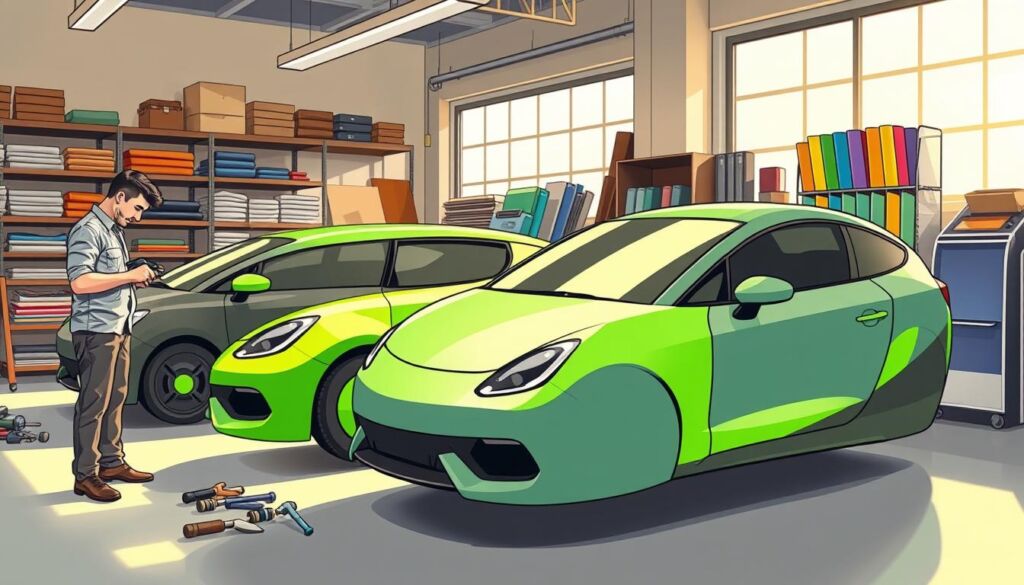
The life of a vehicle wrap depends on a few things. These include the wrap’s quality, how it’s put on, and how well you take care of it. A good wrap can last 5 to 7 years. Looking after it well can make it last longer.
Maintenance Requirements
Wash your wrap with soft soap and stay away from harsh cleaners. Don’t use strong water sprays on the edges or seams. Check it often to spot problems early.
Protection Benefits
Vehicle wraps protect your car from fading, scratches, and damage from the weather. This keeps your car looking great and might even make it worth more when you sell it.
Removal Process
When it’s time to take off your wrap, get a pro to do it. This avoids hurting your car’s paint. The process involves heating the wrap to make the adhesive come loose, then peeling it off carefully. Some important things to remember are:
- Get a pro to avoid paint damage
- Heat it to loosen the adhesive
- Peel it off gently to keep your car’s surface safe
Design Possibilities and Limitations
Vehicle wraps are a blank canvas for creativity. You can choose between partial or full wraps. Knowing what you can do and what you can’t is important.
Creative Options for Partial Wraps
Partial wraps let you highlight certain parts of your car. You can wrap just the hood, roof, or sides. This is great for businesses that want to make a big impact without a full wrap.
Design Freedom with Full Wraps
Full wraps give you total freedom to design. You can change your car’s look completely. Choose from many colors, patterns, and finishes. This is perfect for a big change or to make your car stand out.
Working with Vehicle Contours
Vehicle wraps can follow your car’s shape. This makes your car look seamless and custom. Designers can make your wrap fit perfectly, highlighting your car’s best features.
Color and Finish Options
You have many color and finish choices. Pick from glossy, matte, metallic, or textured finishes. Choose the right color and finish to match your brand or taste. This makes your wrap eye-catching and unique.
Understanding partial and full wrap design options helps you make a good choice. Whether you want a bold look or a small change, the right design can make your car look amazing.
The Installation Process Explained
The key to a flawless vehicle wrap is in the preparation and installation phases. A successful installation needs careful planning and attention to detail. It also requires a deep understanding of the process.
Preparation Requirements
Before installing a vehicle wrap, the vehicle’s surface must be ready. This means cleaning the surface to remove dirt and wax. It also means removing any existing wraps or decals.
The vehicle’s paint condition should be checked. It must be suitable for wrapping.
Installation Timeline Differences
The time needed for installation varies between partial and full wraps. Partial wraps usually take a few hours to a day. This depends on the design’s complexity.
Full wraps take longer, often several days. This is because they cover more area and have more details.
Professional Installation Steps
A professional installer will follow specific steps for a high-quality finish. They start by measuring and cutting the vinyl to exact sizes. Then, they apply the wrap to the vehicle’s surface.
They use special tools to remove air bubbles and excess material.
Quality Control Measures
Professional installers use quality control measures to ensure a flawless finish. They check the wrap for any defects. They also make sure it’s properly aligned and securely stuck to the vehicle’s surface.
Choosing the Right Wrap for Different Vehicle Types
It’s important to know what your vehicle needs when picking between partial and full wraps. Each vehicle is different, affecting your choice.
Cars and Sedans
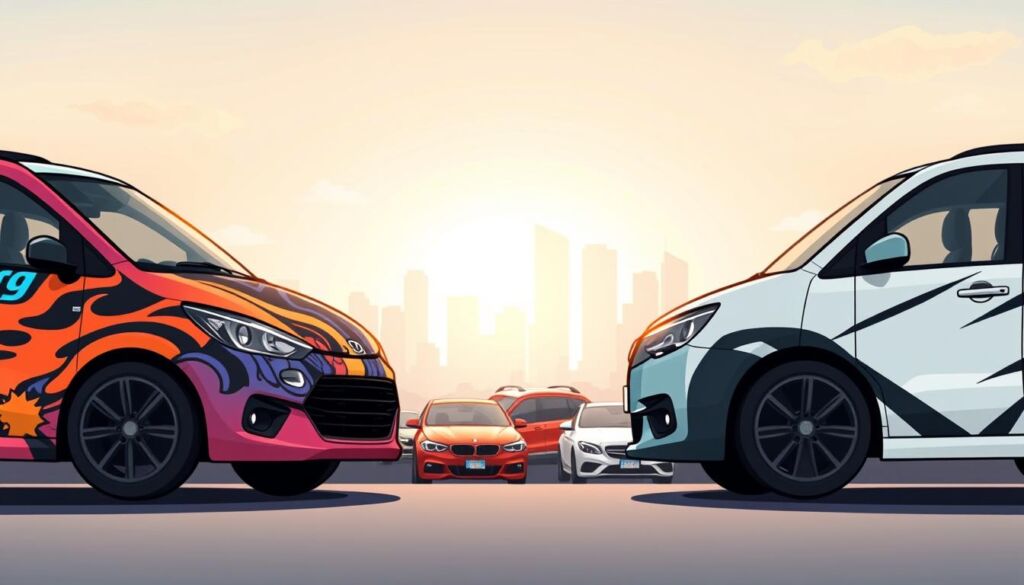
Cars and sedans can go with either partial or full wraps. A full wrap changes the car’s look completely. A partial wrap focuses on certain parts. Think about what you want to show off and the car’s look before you decide.
SUVs and Trucks
SUVs and trucks have more space, making full wraps a good choice. But, partial wraps work well too. They’re great for highlighting certain spots like the sides or back.
Commercial Vehicles and Fleets
Commercial vehicles and fleets usually get full wraps. They make your fleet look the same, which helps people remember your brand.
Specialty Vehicles
Special vehicles, like food trucks, need wraps that show off their purpose. Think about how people will see your wrap and design it to fit.
| Vehicle Type | Recommended Wrap Type | Key Considerations |
|---|---|---|
| Cars and Sedans | Partial or Full | Branding goals, original design |
| SUVs and Trucks | Full | Maximum visibility, surface area |
| Commercial Vehicles | Full | Uniform appearance, brand recognition |
| Specialty Vehicles | Partial or Full | Public visibility, unique purpose |
Think about your vehicle’s type and use when picking a wrap. This helps you reach your goals.
Why Professional Installation Matters: The Shell Shocked Wraps Difference
Getting a professional to install your vehicle wrap is key. Shell Shocked Wraps is a family-run, veteran-owned business. They are known for their precision and quality.
Common DIY Pitfalls and Risks
Some people try DIY to save money. But, it can lead to problems like bubbles and misaligned designs. These issues can make your wrap look bad and shorten its life.
Shell Shocked Wraps’ Expertise and Experience
Shell Shocked Wraps has years of experience. Their team knows how to handle different vehicles and designs. They make sure your wrap looks perfect.
Premium Materials and Techniques
Shell Shocked Wraps uses top-notch materials. These materials are tough and last long. Their methods keep your wrap looking good and protected from the weather.
The 1-Year No-B.S. Warranty Advantage
Shell Shocked Wraps offers a 1-year no-B.S. warranty. This warranty covers any defects in materials or workmanship. It gives you peace of mind.
What the Warranty Covers
The warranty protects against peeling, bubbling, and cracking. It makes sure your investment is safe.
Peace of Mind for Your Investment
With Shell Shocked Wraps’ warranty, you can drive without worry. Any problems will be fixed quickly and professionally.
Conclusion: Making the Right Choice for Your Vehicle
Choosing between partial and full wraps for your vehicle depends on several factors. These include your budget, marketing strategy, and vehicle type. By understanding the differences, you can make a choice that fits your needs.
A vehicle wrap comparison shows partial wraps are cost-effective and focus on branding. Full wraps offer more visual impact and protect your paint. Think about what you want most when deciding between partial vs full wraps.
For a great wrap, work with a pro like Shell Shocked Wraps. They use top materials and know how to wrap your vehicle right.
Ready to move forward? Contact Shell Shocked Wraps for a consultation or quote. Their team is ready to help you wrap your vehicle.