

Protecting your car’s paint is important. You might have thought about using a paint protection film. But have you looked at the different thickness options and how they affect durability and flexibility?
Shell Shocked Wraps is a trusted name for PPF installation. They offer a 1-year no-B.S. warranty. This gives you peace of mind. They are experts in precision wraps and coatings, making sure your car is well-protected.
The thickness of the paint protection film is key to its success. Thicker films might protect more, but they can also be less flexible. Knowing these differences helps you make a smart choice.
Key Takeaways
- PPF thickness affects durability and flexibility.
- Shell Shocked Wraps offers a 1-year no-B.S. warranty.
- Thicker films may offer more protection but can be less flexible.
- Understanding PPF thickness options is crucial for informed decisions.
- Shell Shocked Wraps is a trusted provider of PPF installation services.
What Is PPF and Why Thickness Matters
Knowing about PPF is key for car owners. Paint Protection Film, or PPF, is a clear film for cars. It protects against rock chips, bug splatters, and UV damage.
The Science Behind Paint Protection Film
PPF has layers for different jobs. The top layer keeps the car shiny and protects from UV rays. The middle layer is the strong part that absorbs impacts.
The bottom layer sticks the film to the car’s paint. The film’s thickness is measured in mils or microns. Thicker PPF is stronger but harder to bend for curved parts.
How Thickness Affects Performance and Longevity
PPF’s thickness affects how well it works and lasts. Thicker films stop rock chips better but fit less well on curves. Thinner films are easier to put on but don’t protect as much.
- Key benefits of thicker PPF:
- More impact resistance
- Better against rock chips and debris
- Lasts longer
- Potential drawbacks:
- Less flexible
- Harder to install
Shell Shocked Wraps’ Approach to Quality PPF Selection
At Shell Shocked Wraps, we pick the best PPF for your car. We choose films that are both strong and flexible. We have many thicknesses to fit your needs.
Understanding PPF and its thickness helps you choose the right protection. Whether you want the strongest or easiest to install, we have it.
Standard PPF Thickness Measurements Explained
To get the right protection, knowing how PPF thickness is measured is key. The thickness of Paint Protection Film (PPF) affects its performance and how long it lasts.
Mils vs. Microns: Understanding PPF Measurement Units
PPF thickness is usually measured in mils. One mil is 0.001 inches. Some use microns (1 micron = 0.001 millimeters) too. It’s important to know these units to compare PPF products.
Industry Standard Thickness Ranges
PPF thickness standards vary. But, most are between 6 to 8 mils for basic protection. Premium, heavy-duty protection can be up to 10 mils or more. Here’s a table showing typical thickness ranges and their uses:
| Thickness Range (mils) | Application |
|---|---|
| 4-6 | Ultra-thin, basic protection |
| 6-8 | Standard protection, balanced performance |
| 8-10+ | Premium, heavy-duty protection |
How Professionals Measure and Verify PPF Thickness
Experts use special tools to check PPF thickness accurately. This makes sure the film meets the maker’s specs and offers the right protection.
Knowing how PPF thickness is measured and checked helps you choose the best protection for your car. Whether you want standard or premium protection, understanding thickness is crucial.
Exploring PPF Thickness Differences: From Ultra-Thin to Heavy-Duty
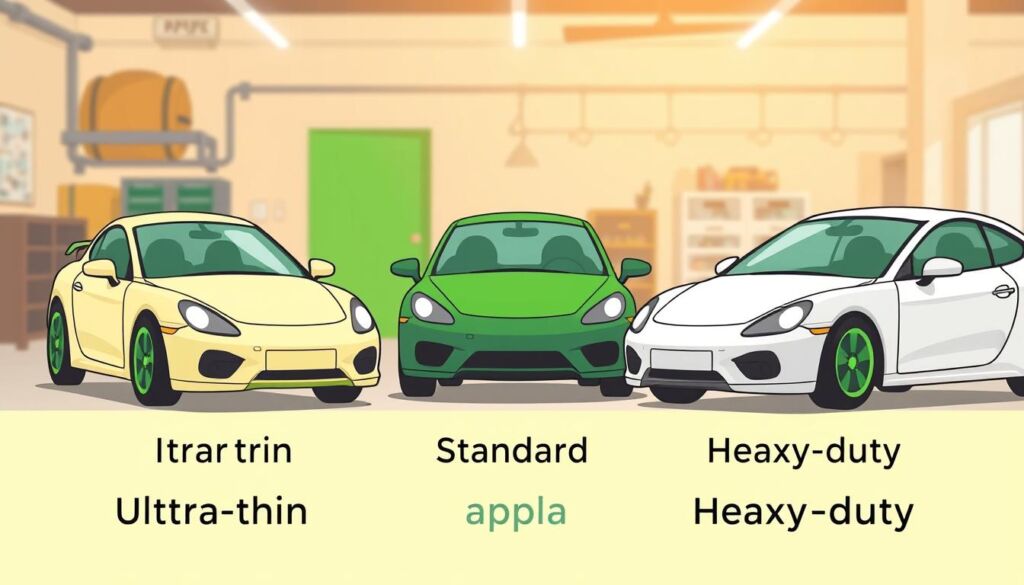
PPF thickness varies a lot, from very thin to very thick. Each type is made for different needs and likes. Knowing about PPF thickness helps you choose the right one for your car and what you want.
Ultra-Thin Options (4-6 mils)
Ultra-thin PPFs are 4 to 6 mils thick. They are for those who want a thin layer of protection. They are great for daily drivers who want to keep their car looking new.
Ultra-thin PPFs protect without changing how your car looks.
Standard Options (6-8 mils)
Standard PPFs are 6 to 8 mils thick. They offer good protection and are easy to see. They are good for many driving situations.
These films protect well and can cover many parts of your car.
Premium Options (8-10+ mils)
Premium PPFs are 8 mils or thicker. They are for extreme conditions like off-roading. They are very tough and protect well.
Multi-Layer Construction Benefits
Many PPFs have layers for better protection. They have a top coat for scratches, a middle layer for impacts, and an adhesive for sticking to paint.
“The multi-layer construction of premium PPFs represents a significant advancement in paint protection technology, offering unparalleled protection and durability.”
This design makes PPFs last longer and protect better. It’s a big step forward in car protection.
In short, picking the right PPF thickness depends on your needs and how you drive. Knowing about ultra-thin, standard, and premium PPFs helps you choose wisely.
How PPF Thickness Impacts Protection Capabilities
PPF thickness is very important for its protection against many dangers. The protection you need depends on how you use your vehicle, the weather, and what you like.
Rock Chip and Impact Resistance
A thicker PPF can better protect against rock chips and other debris. For example, a premium PPF that’s 8-10 mils thick is more resistant to impacts than thinner ones.
| PPF Thickness (mils) | Rock Chip Resistance |
|---|---|
| 4-6 | Moderate |
| 6-8 | Good |
| 8-10+ | Excellent |
Chemical and Environmental Protection
Thicker PPFs also protect your vehicle’s paint from harmful chemicals and pollution. They keep your paint safe from acid rain, bird droppings, and other bad stuff.
UV Damage Prevention
PPF also protects against UV damage. Thicker films protect your paint and keep your vehicle looking good.
Self-Healing Properties and Thickness Correlation
The self-healing of PPF depends on its thickness. Thicker PPFs can heal better from small scratches and swirls.
Choosing the right PPF thickness depends on your needs and what you want for your vehicle. Talking to a PPF expert can help you decide.
Durability and Longevity: The Role of PPF Thickness
Knowing how PPF thickness affects durability is key. The thickness of your Paint Protection Film (PPF) matters a lot. It decides how long it lasts and how well it works over time.
Expected Lifespan Based on Thickness
PPF’s lifespan changes with its thickness. Thicker PPF lasts longer and is more durable. Here’s a quick look:
| PPF Thickness | Expected Lifespan |
|---|---|
| 4-6 mils | 2-3 years |
| 6-8 mils | 4-5 years |
| 8-10+ mils | 5+ years |
Maintenance Requirements for Different Thicknesses
Thicker PPF needs less care because it’s more durable. Still, all PPF needs regular washing and avoiding harsh chemicals to stay good.
Shell Shocked Wraps’ 1-Year No-B.S. Warranty Explained
At Shell Shocked Wraps, we back our PPF with a 1-Year No-B.S. Warranty. This shows we trust our PPF quality and longevity. It gives you peace of mind with your investment.
Choosing the right PPF thickness keeps your vehicle safe for years. Our team is ready to help you pick the best option for your needs and budget.
Aesthetic Considerations: How Thickness Affects Appearance
PPF thickness greatly changes how your car looks. The right thickness makes your car look good and stay protected.
Visibility and Clarity Differences
Thicker PPFs can be more visible, which might make your paint job look less sharp. But, ultra-thin films are less noticeable. They might not protect as well as thicker ones.
Orange Peel Effect and Thickness Correlation
The orange peel effect can be caused by PPF thickness. If not applied right, thicker films can make it worse. But, pros can fix this and make your car look smooth.
Gloss Retention Properties
PPF’s gloss retention is important. Thicker films usually keep the gloss better. But, it also depends on the film’s quality and how it’s installed.
Professional Installation’s Impact on Final Appearance
Getting a pro to install your PPF makes a big difference. They make sure it’s applied right, keeping your car looking great. At Shell Shocked Wraps, our experts do top-notch jobs that keep your car beautiful.
Installation Challenges with Various PPF Thicknesses
Different PPF thicknesses have their own installation challenges. The film’s thickness greatly affects how hard it is to install.
Handling and Conformability Issues
Thicker PPF is harder to install because it’s less flexible. This is true for cars with many curves. Installing thicker films needs more skill and experience to avoid mistakes.
Complex Curves and Contours
Cars with detailed designs are hard to work with when installing PPF. Thicker films struggle to fit these shapes, making mistakes more likely. Experts use special tools and methods to fix this.
Why Professional Installation from Shell Shocked Wraps Matters
Professional installation is key for PPF, even more so for thicker types. Shell Shocked Wraps has skilled installers. They know how to apply PPF of all thicknesses perfectly.
Common DIY Installation Pitfalls
Trying to install PPF yourself can cause problems. These include:
- Bubbles and wrinkles
- Incorrect sizing and cutting
- Difficulty conforming to complex curves
- Damage to the PPF or vehicle paint
Seeking professional help is best to avoid these issues. Here’s a table showing the main challenges with different PPF thicknesses:
| PPF Thickness | Installation Challenges | Recommended Installer Skill Level |
|---|---|---|
| Ultra-Thin (4-6 mils) | Easy to conform, but prone to damage | Basic |
| Standard (6-8 mils) | Moderate conformability, balanced protection | Intermediate |
| Premium (8-10+ mils) | Difficult to conform, high protection | Advanced |
Knowing these challenges and picking the right installer ensures a good PPF job. This protects your vehicle well.
Cost Analysis: Is Thicker PPF Worth the Investment?
Thicker PPF gives more protection. But is it worth the extra cost? We need to look at the upfront cost and long-term savings.
Price Differences Between Thickness Options
The price of PPF changes with its thickness. Ultra-thin options (4-6 mils) are cheaper. Premium thickness films (8-10+ mils) cost more.
A standard car might need 60-70 square feet of film. This can cost $800 to $2,000 or more. It depends on the film’s thickness and quality.
Value Proposition of Premium Thickness Films
Premium films protect against rock chips, scratches, and more. They are pricier but offer long-term benefits. They keep your car looking good longer.
Long-Term Cost Benefits Analysis
Thicker PPF can save money in the long run. It prevents expensive repairs. It also keeps your car’s value high, making the initial cost worth it.
Resale Value Considerations
A car with thick PPF holds its value better. It keeps the paint in great shape. This makes it more appealing to buyers.
In summary, thicker PPF costs more at first. But its long-term benefits and savings make it a good choice for many car owners.
Choosing the Right PPF Thickness for Your Vehicle and Needs
Finding the perfect PPF thickness for your car can seem hard. But, it’s easier than you think. Think about your driving, the type of car you have, and where you drive.
Driving Habits and Environmental Factors
How you drive matters a lot. If you drive on highways or in bad weather, you need thicker PPF. But, if you drive in the city, a standard thickness might be enough.
Vehicle Type and Usage Considerations
The car you drive and how you use it also matter. Luxury cars or off-road vehicles might need thicker PPF for better protection.
Daily Drivers vs. Show Cars
Daily drivers don’t need as much protection as show cars. Show cars face harsher conditions.
Off-Road and Extreme Conditions
For off-road or extreme use, choose a thicker PPF. It helps protect against rocks and debris.
Budget Constraints vs. Protection Requirements
Money is important, but don’t forget about protection. Thicker PPF costs more but saves money in the long run by avoiding repairs.
| Vehicle Type | Recommended PPF Thickness | Protection Level |
|---|---|---|
| Daily Driver | 6-8 mils | Standard |
| Show Car | 8-10+ mils | Premium |
| Off-Road Vehicle | 10+ mils | Heavy-Duty |
Shell Shocked Wraps’ Personalized Consultation Process
At Shell Shocked Wraps, we know every car is different. Our team helps you find the best PPF thickness for your needs. We consider your driving, car type, and budget to guide you.
Conclusion: Making an Informed Decision About PPF Thickness
Choosing the right PPF thickness is very important. It helps protect and last longer. There are different thicknesses, like 8 mils to 10 mils or more.
Knowing these PPF thickness differences helps pick the best one for your car.
When thinking about PPF, consider how you drive, the weather, and your budget. Premium PPF has special features like self-healing and water-repelling. You can learn more on Shell Shocked Wraps’ PPF installation page.
For a good choice, talk to experts. Shell Shocked Wraps gives personal advice. They help you find the perfect PPF for your car. This way, you get long-lasting protection and peace of mind.