


You’ve spent a lot on your vehicle, and you want to keep it safe. That’s why self-healing PPF is great. It’s a clear, tough layer that goes over your car’s paint to protect it from harm.
At Shell Shocked Wraps, a family and veteran-owned business, they offer top-notch services. They do precision wraps, PPF, ceramic coatings, and window films. They make sure your car is safe with the newest advanced materials science.
This cool fix can fix small scratches and swirl marks on its own. So, your car stays looking fresh. With self-healing PPF, you can drive without worry, knowing your car’s paint is safe.
Key Takeaways
- Self-healing PPF is a clear layer that guards your car’s paint from harm.
- It can fix small scratches and swirl marks by itself.
- Shell Shocked Wraps is a trusted name for high-quality PPF services.
- Advanced materials science makes this smart solution.
- Self-healing PPF keeps your car looking new and safe.
What is Paint Protection Film (PPF)?
Paint Protection Film, or PPF, is a new way to keep your car looking good. It protects your car’s paint, keeping it shiny and valuable.
The Evolution of Vehicle Protection
PPF has changed a lot over time. It started with the military and now helps cars. It uses special materials that fix small damages and look new again.
Key Components of Modern PPF
Modern PPF has many parts, each with its own job. Knowing about these parts helps us understand how PPF works.
Polyurethane Layer
The polyurethane layer is the heart of PPF. It’s made of thermoplastic polyurethane (TPU). This material is tough and flexible, protecting your car well.
Adhesive Layer
The adhesive layer sticks the PPF to your car. It’s strong but gentle, so it doesn’t harm your car’s paint.
Clear Coat
The clear coat is the top layer. It makes your car shiny and protects it from the outside. This layer keeps your car looking new for a long time.
At Shell Shocked Wraps, we use top-notch materials and care about our customers. Our PPF uses the latest innovative film technology and polymer nanotechnology for the best protection.
Understanding Self-Healing Film Technology
Advanced materials science makes self-healing film technology amazing. It protects modern vehicles like never before. This tech is changing how we keep our cars safe from daily damage.
The Science Behind Self-Healing Properties
The top layer of the film is made from elastomer polymers. These can fix small scratches when heated. This lets the film fix itself, keeping your car looking good.
How Self-Healing Differs from Traditional Films
Self-healing films are different from old paint protection films. They use cutting-edge film technology to fix small damages. This makes the film last longer and work better.
The Innovation Timeline of PPF Technology
Self-healing PPF technology is a big step forward in car protection. It has grown a lot, getting better and more durable over time.
Thinking about using the latest tech to protect your car? We suggest you schedule a consultation or request a quote. See how self-healing film technology can help your vehicle.
The Molecular Structure of Self-Healing PPF
The molecular structure of self-healing PPF is amazing. It’s made of Thermoplastic Polyurethane (TPU). TPU is known for being strong and able to fix itself.
Polymer Composition
The makeup of self-healing PPF is key to its success. TPU is very strong. It bends but doesn’t break easily.
It can handle very hot or cold temperatures. This makes it great for protecting paint.
Elastomeric Properties
TPU in self-healing PPF is very stretchy. It can bend and then go back to normal. This helps it absorb small hits and scratches.
Memory Characteristics of Advanced Polymers
Advanced polymers in self-healing PPF remember their shape. They go back to normal after being bent. This is thanks to special bonds in the material.
At Shell Shocked Wraps, we use these materials. We offer a 1-year no-B.S. warranty. This means you can trust your investment.
| Material Property | Benefit | Impact on Vehicle Protection |
|---|---|---|
| Elastomeric Properties | Absorbs minor impacts and scratches | Reduces visible damage on vehicle surface |
| Molecular Cross-linking | Enhances material’s memory characteristics | Improves self-healing efficiency |
| TPU Composition | Offers flexibility and abrasion resistance | Provides long-lasting protection against various environmental factors |
How the Self-Healing Process Actually Works
Ever wonder how self-healing PPF fixes your car’s surface? It’s a cool feature that makes modern PPF different from old ones.
Heat Activation Mechanisms
Heat is key to making self-healing PPF work. It can come from many places. This tech uses heat to fix small damages and make your car look new again.
Solar Heat Activation
Sunlight is a natural way to start the self-healing process. The sun’s warmth is enough to make the film fix itself. It’s a simple way to keep your car looking good.
Engine Heat Utilization
Your car’s engine also helps activate the self-healing. This is great in cold places where sunlight is scarce.
Natural vs. Accelerated Healing
Self-healing PPF can fix itself over time. But, you can also make it heal faster. Knowing how to do this can help you get the most from your PPF.
Using Hot Water to Speed Up Healing
Hot water can make the healing process quicker. Just apply it to the damaged spot. It helps the film fix scratches and swirls faster.
Heat Gun Applications
In cold weather or for bigger damages, a heat gun works well. But, be careful not to overheat the PPF. That could harm it.
To keep your self-healing PPF working well, follow some simple care tips. Clean it regularly and avoid harsh chemicals. This keeps the film in good shape and its healing powers active.
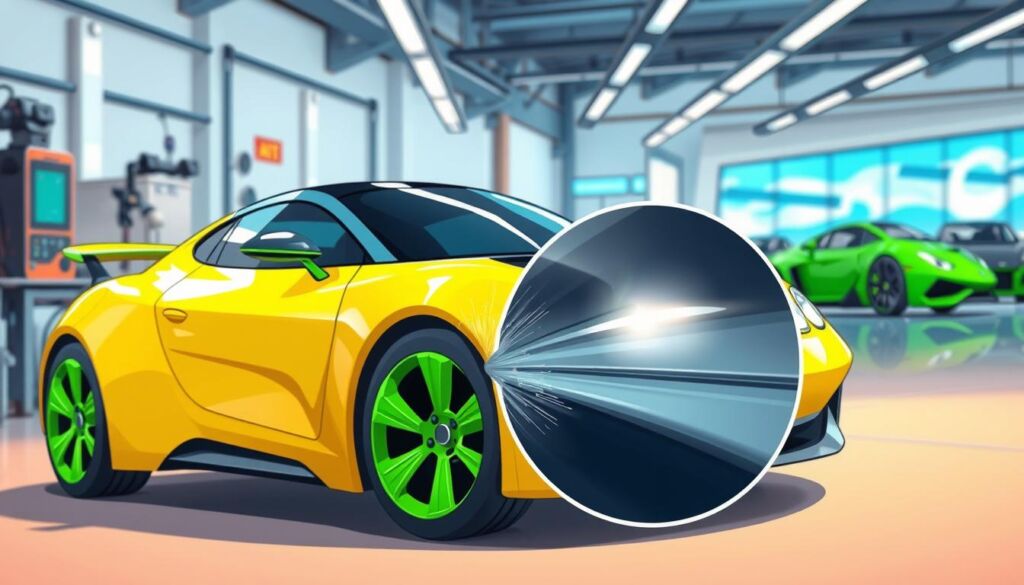
- Regularly wash your vehicle to prevent dirt buildup.
- Avoid using harsh chemicals or abrasive materials.
- Use a soft cloth and mild soap for cleaning.
By knowing how self-healing PPF works and caring for it, your car will stay looking great for a long time.
Types of Damage Self-Healing PPF Can Repair
The cutting-edge film technology behind self-healing PPF fixes many damages. This keeps your vehicle looking great. It uses self-healing polymer films for this.
Minor Scratches and Swirl Marks
Self-healing PPF fixes small scratches and swirl marks. These happen from driving every day. Thanks to advanced materials science, these marks can be fixed or gone.
Light Impact Damage
It also fixes light impact damage. This includes small bumps or road debris. It keeps your car looking good and its value high.
Chemical Stain Resistance
Self-healing PPF also fights off chemical stains. So, bird droppings or sap won’t harm your car’s paint.
Limitations of Self-Healing Capabilities
But, self-healing PPF isn’t perfect. Deep scratches and heavy damage need a pro. Knowing its limits helps you understand what it can do.
Want to know more about self-healing PPF for your car? Or check out our premium options? Visit our contact page. Our team is here to help and give advice.
Comparing Premium vs. Budget Self-Healing PPF
Choosing the right self-healing PPF for your car is important. You need to know the difference between premium and budget options. The materials used in these films affect how well they work and last.
Quality Differences in Materials
Premium self-healing PPF, like Shell Shocked Wraps, uses polymer nanotechnology. This makes it more durable and effective. Budget options might not be as good because they use simpler materials.
Healing Efficiency Comparisons
The healing power of self-healing PPF is key. Premium products heal faster and better, thanks to innovative film technology. This means small scratches and swirls can fix themselves without help.
Longevity and Warranty Considerations
Think about how long the PPF lasts and the warranty when you buy it. Premium PPF lasts longer and has longer warranties. This makes it a better deal in the long run.
A happy customer said,
“The premium PPF was worth every penny; it’s been a game-changer for my vehicle’s maintenance.”
Choosing a trusted provider like Shell Shocked Wraps means you get a top-quality product. It will protect your car’s paint for many years.
The Professional Installation Process for Maximum Effectiveness
Getting a pro to install self-healing PPF is key. It makes sure the film works well and lasts long. The tech behind it is cool, but how it’s put on your car matters a lot.
Why DIY Installation Often Fails
Trying to do it yourself can cause problems. DIY often leads to bubbles, creases, and uneven coverage. These issues mess up how the film looks and works.
Surface Preparation Requirements
First, you need to clean the surface well. This removes dirt, wax, and other stuff that can mess with the film sticking. A clean surface is key for a strong bond.
Precision Application Techniques
Putting on the PPF needs skill and special tools. Pros make sure it fits right, following your car’s shape. This is important for the film to heal itself well.
Post-Installation Care
After it’s on, you need to take care of it. Pros will tell you how to clean and keep it up. This helps it stay in top shape.
For the best results, get a pro to do it. Book a time with Shell Shocked Wraps for top-notch service. They use the latest tech and know-how.
Maintaining Your Self-Healing PPF
Keeping your self-healing PPF clean is important. It helps it work well for a long time. This is key for its advanced protection.
Recommended Cleaning Products
Use mild car wash soap and soft cloths to clean. Stay away from harsh chemicals and rough stuff that can harm it.
Practices to Avoid
- Avoid using high-pressure washes directly on the film edges.
- Never use household cleaners or solvents.
- Don’t wax or use products containing petroleum distillates on the PPF.
Optimizing the Self-Healing Properties
To make the self-healing work, use warm water or sunlight. For more info, visit this resource.
Seasonal Maintenance Tips
Winter: Remove snow and ice often to avoid damage. 
Follow these tips to keep your self-healing PPF in top shape. It will keep protecting your car’s paint.
Common Misconceptions About Self-Healing PPF
There’s a lot of confusion about self-healing PPF. It’s time to clear up the myths. Many car owners are excited about using this innovative film technology to protect their cars. But, there are many myths and misconceptions that need to be fixed.
Debunking PPF Myths
One myth is that self-healing PPF can fix any damage. It’s true that this film can heal from minor scratches and swirl marks. But, it’s not a magic fix for deep scratches or severe damage.
Setting Realistic Expectations
It’s key to know that self-healing PPF uses advanced materials science. This tech lets the film go back to normal after minor damage. But, it’s not perfect and needs proper care.
Understanding the Difference Between Healing and Replacement
Healing means the film fixes minor damage. Replacement means you need a new film for bigger damage. Not all damage can be fixed, and sometimes you need a new film. For more info on protecting your car and professional installation, visit our contact page.
The Long-Term Benefits of Investing in Quality PPF
Choosing quality Paint Protection Film (PPF) is a smart move. It keeps your car’s paint safe and makes it look better. Plus, it increases your car’s value.
Paint Protection and Resale Value
Quality PPF keeps your car’s paint looking new. This makes your car more appealing to buyers. So, you can sell it for more money.
Cost Analysis: PPF vs. Repainting
PPF might cost more at first. But, it saves you money in the long run. Repainting can be very expensive. PPF prevents this, saving you thousands.
To learn more, check out Autozcrave’s guide on self-healing PPF.
Environmental Protection Benefits
PPF also helps the environment. It means you don’t need to repaint as often. Repainting uses harmful chemicals and a lot of energy.
Modern PPFs, like those with polymer nanotechnology, are better for the planet.
Investing in quality PPF has many benefits:
- It protects your car’s paint from damage.
- It makes your car more valuable when you sell it.
- It saves you money by avoiding expensive repainting.
- It’s better for the environment by reducing the need for repainting.
For top-notch PPF installation, visit Shell Shocked Wraps’ PPF installation page. They offer the best in film technology.
Why Choose Shell Shocked Wraps for Your PPF Needs
At Shell Shocked Wraps, we use the latest self-healing film technology. Our team is skilled in advanced materials science. We offer top-notch Paint Protection Film (PPF) to keep your car looking new.
Our Expertise and Premium Materials
Shell Shocked Wraps uses premium self-healing polymer films. These films can handle daily driving well. Our experts know how to apply them perfectly.
Family-Run, Veteran-Owned Commitment to Quality
Our business is family-run and veteran-owned. We take pride in our work. Every installation is done with care and duty.
Our 1-Year No-B.S. Warranty
We offer a 1-year no-B.S. warranty. This gives you peace of mind. It shows we trust our PPF work.
Customer Success Stories
Our customers love the paint protection we provide. They say our work keeps their car looking great. Shell Shocked Wraps is known for excellent PPF services.
Want to protect your car’s paint? Schedule a consultation or request a quote today. See the Shell Shocked Wraps difference for yourself.
Conclusion: Protecting Your Investment with Self-Healing Technology
You’ve learned about self-healing Paint Protection Film (PPF). It’s great for keeping your car’s paint safe. It also makes your car more valuable when you sell it.
This film fixes small scratches and swirls on its own. It keeps your car looking new for a long time. The film is made of new materials that protect your car from damage.
If you want to know more about protecting your car, contact Shell Shocked Wraps. We offer top-notch service. We make sure your car gets the best protection with our innovative film technology.
