

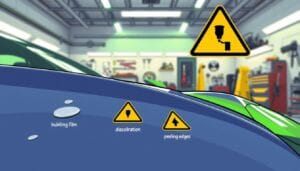
As a car owner, you know how important it is to keep your car looking good. The Paint Protection Film (PPF) is key in protecting your car’s paint. At Shell Shocked Wraps, we are a family-run, veteran-owned company. We specialize in precision wraps, PPF, ceramic coatings, and window films.
Ignoring your PPF can cost a lot. It’s important to know the signs that your PPF needs attention. Our team at Shell Shocked Wraps is here to help keep your vehicle’s protective film in great shape.
Key Takeaways
- Regular PPF maintenance is crucial for your vehicle’s longevity.
- Shell Shocked Wraps offers expert PPF installation and maintenance services.
- Neglecting PPF can result in costly repairs and damage.
- Our team is dedicated to providing precision wraps and protective films.
- Stay informed about the warning signs that your PPF needs attention.
Understanding Paint Protection Film and Its Importance
If you want your car to look great, you need to know about Paint Protection Film (PPF). PPF is a clear, strong layer put on your car’s paint. It keeps it safe from rock chips, bug splatters, and small scratches.
What is PPF and How Does It Protect Your Vehicle?
PPF is like a shield for your car’s paint. It stops damage from getting to the paint. It’s very good for places that get hit a lot, like the front bumper and hood.
The Lifespan of Quality PPF
A good PPF can last 5 to 10 years. How long it lasts depends on the brand and how you take care of it. Sunlight, washing, and weather can affect its life.
Why Regular Inspection Matters
Checking your PPF often is very important. Look for tears, bubbles, or color changes. This way, you can fix problems before they get worse. Keeping your PPF in good shape helps protect your car’s paint.
Yellowing or Discoloration: A Major Warning Sign
Yellowing or discoloration of your vehicle’s PPF is not just a cosmetic issue; it’s a warning sign that something is amiss. This change in appearance can be due to various factors. Understanding the cause is crucial to determining the appropriate course of action.
Why PPF Yellows Over Time
PPF yellowing is often a result of the degradation of the polyurethane material used in its construction. Over time, exposure to environmental factors can cause the film to break down. This leads to a yellowish hue.
This process can be accelerated by several factors. These include UV exposure, heat, and contaminants.
Distinguishing Between Normal Aging and Premature Yellowing
It’s essential to differentiate between normal aging and premature yellowing. Normal aging occurs gradually over a long period. Premature yellowing happens more quickly.
Premature yellowing can be a sign of a manufacturing defect, improper installation, or exposure to harsh conditions.
How UV Exposure Affects PPF Clarity
UV radiation is a significant factor in PPF degradation. Prolonged exposure to UV rays can cause the film to become brittle. It loses its clarity and eventually turns yellow.
The impact of UV exposure on PPF clarity can be significant. This is shown in the following table:
| UV Exposure Level | Effect on PPF Clarity | Timeline |
|---|---|---|
| Low | Minimal impact, slight haze | Several years |
| Moderate | Noticeable yellowing, reduced clarity | 2-5 years |
| High | Significant yellowing, loss of transparency | 1-2 years |
Understanding the effects of UV exposure on your PPF can help you take preventive measures. This can maintain its clarity and extend its lifespan.
Bubbling and Air Pockets in Your PPF
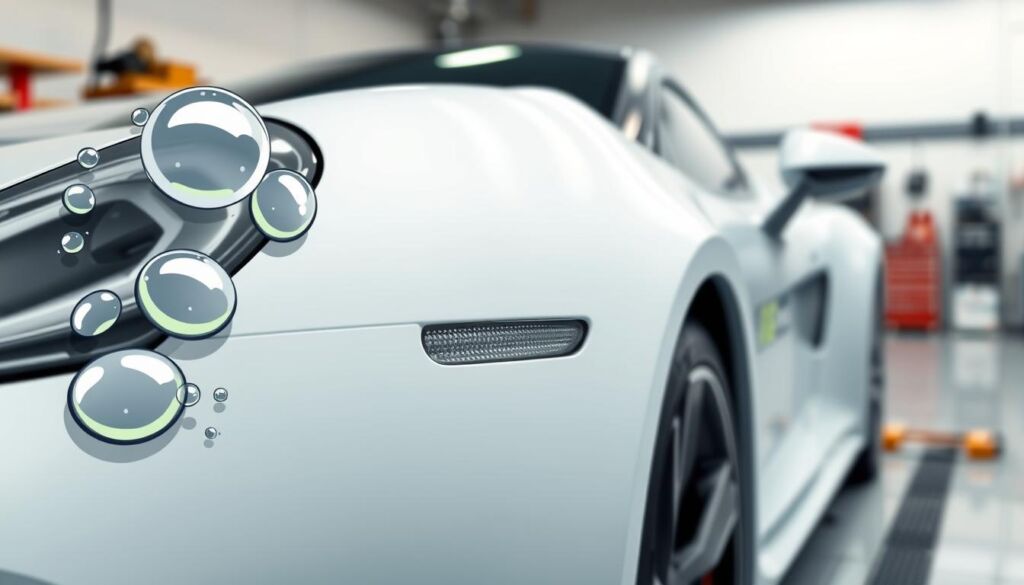
Air pockets and bubbles under your PPF are not just cosmetic issues; they can indicate underlying problems. Bubbling in PPF can be a cause for concern for vehicle owners who have invested in this protective solution. Understanding the causes and implications of these bubbles is crucial for maintaining the integrity and effectiveness of your PPF.
Common Causes of Bubbling
Bubbling in PPF can occur due to several reasons. One of the primary causes is the presence of moisture or debris trapped between the PPF and the vehicle’s paint during installation. Improper installation techniques can lead to these issues, emphasizing the importance of having your PPF installed by experienced professionals.
When Bubbles Indicate Installation Issues vs. Damage
Distinguishing between bubbles caused by installation issues and those resulting from damage is vital. Bubbles that appear soon after installation are likely related to the installation process. On the other hand, bubbles that form later may indicate damage or exposure to extreme conditions. Understanding the timing and circumstances of bubble formation can help you address the root cause.
| Cause | Characteristics | Action |
|---|---|---|
| Installation Issues | Bubbles appear soon after installation, often due to trapped debris or moisture. | Consult the installer for correction or removal. |
| Damage or Extreme Conditions | Bubbles form later, possibly due to road debris, weather conditions, or other external factors. | Assess the damage and consider professional repair or replacement. |
Small vs. Large Bubbles: What They Mean
The size of the bubbles can also provide insight into their cause. Small bubbles might be less concerning and could be the result of minor imperfections. Large bubbles, on the other hand, could indicate more significant issues, such as substantial damage or large areas of poor adhesion. Monitoring the size and growth of bubbles is essential for determining the appropriate course of action.
Experts say, “Regular inspection of your PPF is crucial for identifying issues like bubbling early on, allowing for timely intervention.” Regular maintenance and inspections can help prevent minor issues from becoming major problems. This ensures your PPF continues to protect your vehicle’s paint effectively.
Peeling Edges: Clear Signs Your PPF Needs Attention
Seeing peeling edges on your car’s PPF means it’s time to act fast. This keeps your car’s protective layer safe. The edges of your Paint Protection Film are more likely to peel because of many reasons.
Why Edges Are Vulnerable
The edges of your PPF face more stress and weather than the rest. They get hit by sunlight, weather changes, and road debris.
Weather Conditions: Extreme temperatures and UV rays can make the adhesive weak. This causes the edges to peel. For more info on UV effects, check this article.
Impact of Washing Habits
How you wash your car can hurt your PPF’s edges. High-pressure washes and harsh chemicals can damage it. Use soft washing methods and the right cleaners to keep your PPF safe.
| Washing Method | Effect on PPF Edges | Recommendation |
|---|---|---|
| High-Pressure Wash | Can cause peeling and damage | Avoid using high pressure |
| Gentle Hand Wash | Safe for PPF edges | Recommended |
| Automatic Car Wash | May cause damage depending on the brushes used | Use with caution |
Early Intervention
Fixing peeling edges early stops more damage to your car’s paint. If you see peeling, get a pro to check and fix it. For top PPF services, visit Shell Shocked Wraps.
Scratches and Gouges That Won’t Self-Heal
Scratches on your car’s PPF are not just for show. They show when your PPF needs more than just to fix itself. Paint Protection Film can handle many damages, but not all scratches can fix themselves.
Understanding PPF’s Self-Healing Properties
PPF’s self-healing is a big plus. It can fix small scratches and swirl marks, thanks to heat. The self-healing process changes the film’s molecules to “heal” the damage.
- Heat Activation: Heat, from the sun or a gun, starts the self-healing.
- Minor Scratches: Only small scratches can heal; big ones need a pro.
When Damage Exceeds Self-Healing Capabilities
Even though PPF is tough, some damage is too much for it. Deep scratches, gouges, or harsh chemicals can hurt the film. This means it needs fixing or replacing.
Knowing when damage is too much for PPF is key. Look for signs like:
- Scratches that don’t go away with heat.
- Gouges or cuts that show the paint underneath.
The Difference Between Surface and Deep Scratches
Scratches vary in depth. Surface scratches are small and can heal. But deep scratches go deeper and might need a pro.
| Scratch Type | Characteristics | Recommended Action |
|---|---|---|
| Surface Scratches | Minor, superficial | Self-healing with heat |
| Deep Scratches | Penetrate deeply, visible | Professional repair or replacement |
Knowing PPF’s limits helps you spot problems early. This way, you can get help when your PPF needs it.
Cloudy or Hazy Appearance on Your PPF
Your PPF’s clarity is very important. A cloudy look means it needs care. A hazy film on your car is not just ugly. It can also mean your PPF is not working right.
Causes of Haziness in PPF
Many things can make your PPF look hazy. Harsh chemicals, wrong cleaning, or UV damage can all cause it. Knowing why it happens helps fix it.
Determining If Haziness Is Reversible
Some haziness can go away with the right cleaning. But, if it’s from damage or UV, it might not come back. You need to check your PPF to know what to do.
Impact of Cleaning Products on PPF Clarity
Cleaning products can really affect your PPF’s look. Stay away from harsh chemicals or rough stuff. Use mild soap and water or special PPF cleaners instead.
| Cleaning Product | Effect on PPF | Recommendation |
|---|---|---|
| Mild Soap and Water | Gentle, effective cleaning | Recommended |
| Harsh Chemicals | Can damage PPF, cause haziness | Avoid |
| Specialized PPF Cleaning Solutions | Safe, effective for PPF | Recommended |
Knowing why your PPF gets hazy and using the right cleaners helps keep it clear. Regular checks and care are important. They help your PPF last longer and protect your car.
Staining and Chemical Damage to PPF
If you see stains or chemical damage on your car’s PPF, it’s important to know why. Stains and damage can make your PPF less effective. This can hurt its ability to protect your car.
Common Substances That Stain PPF
Many things can stain your PPF, like:
- Fuel spills
- Brake fluid
- Tree sap
- Certain cleaning products
These can get into the PPF and cause lasting stains.
How to Identify Chemical Damage vs. Surface Stains
It’s key to tell chemical damage from surface stains. Chemical damage changes the PPF’s feel or look. Surface stains just look dirty.
| Characteristics | Chemical Damage | Surface Stains |
|---|---|---|
| Appearance | Texture change, clarity loss | Discoloration |
| Cause | Reaction with chemicals | Surface contamination |
| Remedy | Professional repair or replacement | Cleaning or mild abrasive |
Addressing Stains Before They Become Permanent
Clean stains right away with the right cleaners. Don’t use strong chemicals, as they can harm the PPF.
Check your PPF often and clean it well. This helps find stains and damage early. Fixing them fast keeps your PPF working well and your car looking great.
Preventative Maintenance to Extend Your PPF Life
Proper care and maintenance are key to making your vehicle’s PPF last longer. By following a few simple guidelines, you can keep your PPF effective. It will continue to protect your vehicle’s paint.
Proper Washing Techniques for PPF-Protected Vehicles
Washing your vehicle regularly is important. But, it must be done correctly to avoid damaging the PPF. Use a soft, microfiber cloth and a mild soap that is free from harsh chemicals.
Avoid using high-pressure washes or abrasive materials. They can scratch or damage the film.
Products to Use and Avoid on PPF
Not all cleaning products are the same. Avoid using products containing wax, petroleum, or other harsh chemicals. They can degrade the PPF over time.
Instead, choose PPF-specific cleaning solutions. They are designed to be gentle yet effective.
Seasonal Maintenance Tips
Different seasons bring different challenges for your PPF. In the winter, remove snow or ice gently to avoid scratching the film. In the summer, park in shaded areas when possible to reduce UV exposure.
Regularly inspecting your PPF and addressing any issues promptly will help extend its lifespan.
By following these preventative maintenance tips, you can help ensure your PPF continues to protect your vehicle’s paint for years to come. This way, you avoid potential PPF maintenance warning signs and PPF care alert signals.
When to DIY vs. Seek Professional Help
Knowing when to fix PPF problems yourself is key. Some small issues can be fixed at home. But, bigger problems need a pro.
Minor Issues You Can Address at Home
Small scratches or stains on your PPF can be fixed with DIY methods. Using the right cleaning products and techniques helps keep your PPF in shape. A soft wash with a microfiber cloth can clean off small dirt.
Warning Signs That Require Expert Attention
Some signs mean you need a pro to fix your PPF. Look out for big yellowing, large bubbles, or lots of peeling. If you see these PPF repair indicators, get help fast. Big bubbles can let damage reach your car’s paint.
| Issue | DIY Solution | Professional Help |
|---|---|---|
| Minor Scratches | Yes, with proper cleaning | No, unless extensive |
| Significant Yellowing | No | Yes, replacement may be needed |
| Large Bubbles | No, can cause further damage | Yes, professional removal and reinstallation |
The Risks of DIY PPF Repairs
Trying to fix big PPF problems yourself can make things worse. It’s important to know when to ask for help. For more on DIY vs. pro detailing, check this resource.
Knowing when to DIY and when to get a pro helps keep your PPF in top shape. This protects your car’s paint well.
Professional PPF Maintenance at Shell Shocked Wraps
At Shell Shocked Wraps, we offer great PPF maintenance services. We make sure your car looks new. Our team works hard to keep your Paint Protection Film in top shape.
Our Expert Approach to PPF Assessment and Repair
Our experts carefully check your PPF for any damage. They look for yellowing, bubbling, or peeling. Then, we fix these problems so your PPF keeps protecting your car’s paint.
Quality Materials and Installation Techniques
We use the best materials for PPF work at Shell Shocked Wraps. Our team knows the latest ways to install PPF. This ensures your car looks great.
Our Family-Run, Veteran-Owned Commitment to Excellence
We’re a family and veteran-owned business. We offer top service with a personal touch. We know how important it is to protect your car.
The Shell Shocked Wraps 1-Year No-B.S. Warranty
We back our work with a 1-year warranty. We’re sure our PPF services are the best. If there’s a problem, we’ll fix it.
Choosing Shell Shocked Wraps means you get a partner for your car’s care. Contact us to learn more about our services and how we can help.
Conclusion: Protecting Your Investment
Keeping your car’s Paint Protection Film in good shape is key. You’ve learned to spot trouble signs like yellowing and bubbling. These signs mean it’s time to take care of your PPF.
Regular checks and the right care can make your PPF last longer. But knowing when to get help is just as important.
If you see any trouble signs, get professional help fast. Shell Shocked Wraps can fix your PPF with top-notch materials and skills. This way, your car stays safe.
Don’t let small problems turn into big ones. Call Shell Shocked Wraps today for a check-up or a quote. Keep your car’s paint looking great with the right PPF care.
