

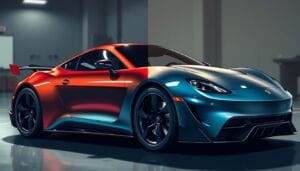
Protecting your vehicle’s paint is crucial for maintaining its appearance and resale value. Two popular options for paint protection are Paint Protection Film (PPF) and Vinyl Wrap. While both serve the purpose of safeguarding your car’s paint, they have distinct differences in terms of application, benefits, and durability.
Understanding the differences between these two options is essential for making an informed decision. Whether you’re a car enthusiast or simply looking to preserve your vehicle’s appearance, this comparison will help you choose the best protection for your vehicle.
Key Takeaways
- PPF offers high-impact protection against scratches and chips.
- Vinyl Wrap provides a customizable appearance with various designs.
- Both options have different installation processes and costs.
- Durability and maintenance requirements vary between PPF and Vinyl Wrap.
- Choosing the right option depends on your specific needs and preferences.
Table of Contents
ToggleWhat is Vinyl Wrap?
The use of vinyl wrap on vehicles has gained significant traction in recent years due to its protective and aesthetic benefits. Vinyl wrap is a vinyl sheet applied to a vehicle’s surface, providing a protective layer against minor scratches and fading. It can also be used to change the color or design of a vehicle.
Definition and Purpose
Vinyl wrap is a protective and customizable vinyl sheet designed for vehicles. Its primary purpose is to safeguard the original paint from damage while offering a fresh new look. The wrap acts as a barrier against environmental factors such as UV rays, dust, and minor abrasions.
The vinyl wrap is made from a high-quality vinyl material that is durable and long-lasting. It is available in a wide range of colors, finishes, and designs, allowing vehicle owners to personalize their cars according to their preferences.
How It Works
The vinyl wrap is applied to the vehicle’s surface using a specialized adhesive. This adhesive ensures that the wrap stays in place without damaging the original paint. The wrap is carefully designed to fit the contours of the vehicle, providing comprehensive coverage.
Once applied, the vinyl wrap creates a protective layer that shields the paint from harmful elements. It also makes it easier to maintain the vehicle’s appearance, as the wrap can be washed and waxed just like the original paint.
Common Applications
Vinyl wrap is commonly used for various purposes, including:
- Protecting the original paint from damage
- Changing the color or design of the vehicle
- Advertising and promotional purposes
- Personalizing the vehicle’s appearance
A comparison of different vinyl wrap applications is shown in the table below:
| Application | Description | Benefits |
|---|---|---|
| Protective Wrap | Protects original paint from damage | Preserves resale value, easy maintenance |
| Color Change Wrap | Changes the vehicle’s color | Aesthetic customization, reversible |
| Promotional Wrap | Used for advertising and promotions | Effective marketing tool, eye-catching |
What is Paint Protection Film (PPF)?
Paint Protection Film, commonly referred to as PPF, is a clear urethane film designed to shield your car’s paint from damage. It’s an innovative solution for vehicle owners who want to maintain their car’s original appearance. By applying PPF, you can protect your vehicle’s paint surface from various forms of damage.
Overview of PPF
PPF is a thermoplastic urethane film that is both flexible and durable. It is designed to absorb impacts from road debris, such as rocks and gravel, without damaging the underlying paint. This film is nearly invisible, making it an attractive option for those who want to preserve their vehicle’s original look.
Key Features
- Impact Resistance: PPF is engineered to withstand impacts from small rocks and debris.
- Self-Healing Properties: Many PPFs have self-healing properties, allowing minor scratches to disappear over time.
- Clarity: The film is designed to be clear and non-yellowing, ensuring it doesn’t affect the appearance of your vehicle.
- UV Protection: PPF protects your vehicle’s paint from UV damage, preventing fading and discoloration.
Popular Uses
PPF is commonly used on high-impact areas of vehicles, such as the front bumper, hood, and side mirrors. It’s particularly popular among car enthusiasts and owners of luxury vehicles who want to maintain their car’s showroom condition. The film can be applied to various surfaces, including paint, chrome, and glass.
By understanding what PPF is and its benefits, you can make an informed decision about whether it’s the right choice for your vehicle. Whether you’re looking to protect your car’s paint or preserve its resale value, PPF offers a robust solution.
Pros and Cons of Vinyl Wrap
When considering car paint protection, understanding the pros and cons of vinyl wrap is crucial. Vinyl wrap has gained popularity among car owners due to its unique benefits and potential drawbacks.
Advantages of Vinyl Wrap
One of the primary benefits of vinyl wrap is its ability to offer customization options. Car owners can choose from a wide range of colors and finishes, allowing for a personalized look that stands out. Additionally, vinyl wrap provides a layer of protection against minor scratches and rock chips, helping to maintain the vehicle’s appearance.
Vinyl wrap is also relatively easy to remove, making it an attractive option for those who may want to change their vehicle’s appearance in the future or return to the original paint job. This removability is a significant advantage, especially for leased vehicles or for owners who like to switch up their car’s look periodically.
- Customization with various colors and finishes
- Protection against minor scratches and rock chips
- Ease of removal
Disadvantages to Consider
Despite its advantages, vinyl wrap has some drawbacks. It may not be as durable as other paint protection options, such as Paint Protection Film (PPF). Vinyl wrap can be prone to damage from certain chemicals or extreme weather conditions, which may affect its longevity and appearance over time.
Moreover, the quality of the vinyl wrap installation can significantly impact its performance and lifespan. A poorly installed vinyl wrap can lead to bubbles, peeling, and other issues that detract from the vehicle’s appearance.
- Less durable compared to PPF
- Susceptible to chemical and weather damage
- Quality installation is crucial
In conclusion, vinyl wrap offers a mix of benefits and drawbacks that car owners should carefully consider. By weighing these pros and cons, individuals can make an informed decision about whether vinyl wrap is the right choice for their vehicle.
Pros and Cons of PPF
When considering paint protection for your vehicle, understanding the advantages and disadvantages of Paint Protection Film (PPF) is crucial. PPF has gained popularity among vehicle owners due to its unique benefits and potential drawbacks.
Benefits of Using PPF
One of the primary advantages of PPF is its superior protection against scratches and rock chips. This film acts as a shield, absorbing impacts that could otherwise damage your vehicle’s paint. Additionally, PPF is self-healing, meaning that minor scratches can disappear over time, especially when exposed to heat.
Another significant benefit is that PPF maintains your vehicle’s original appearance. Since it is a clear film, it doesn’t alter the color or finish of your car’s paint. This characteristic makes it an attractive option for those who want to preserve their vehicle’s showroom look.
As noted by industry experts, “PPF offers a level of protection that is hard to match with other paint protection methods.” This level of protection can significantly reduce the need for costly repairs down the line.
Drawbacks to Keep in Mind
Despite its benefits, PPF has some drawbacks. One of the main disadvantages is its cost. Generally, PPF is more expensive than vinyl wrap, another popular paint protection option. The higher cost is due to the high-quality materials used and the professional installation required.
Speaking of installation, PPF requires professional expertise to apply correctly. Improper installation can lead to bubbles, peeling, or other issues that detract from its effectiveness and appearance.
- High cost compared to some other protection methods
- Requires professional installation
- Potential for improper installation issues
Understanding these pros and cons is essential for making an informed decision about whether PPF is the right choice for your vehicle. By weighing the benefits against the drawbacks, you can decide if the investment in PPF is worthwhile for your specific needs.
Durability: Vinyl Wrap vs PPF
Both Vinyl Wrap and PPF offer protection, but their durability varies significantly. When considering paint protection options, understanding how long each lasts is crucial for making an informed decision.
Lifespan of Vinyl Wrap
The lifespan of a Vinyl Wrap depends on several factors, including the quality of the wrap, the skill of the installer, and environmental conditions. Generally, a well-installed Vinyl Wrap can last between 3 to 7 years.
- High-quality Vinyl Wraps can withstand various weather conditions.
- Proper maintenance can extend the lifespan.
- Exposure to extreme temperatures can affect durability.
Lifespan of PPF
PPF, or Paint Protection Film, is known for its durability and can last significantly longer than Vinyl Wrap. A high-quality PPF installation can last 10 years or more with proper care.
- PPF is resistant to scratches and chips.
- It maintains its clarity over time, protecting the paint.
- Professional installation is key to maximizing its lifespan.
Which Lasts Longer?
Comparing the two, PPF generally outlasts Vinyl Wrap due to its robust material and self-healing properties. While Vinyl Wrap offers flexibility in design and is removable, PPF provides superior protection against damage.
In conclusion, when durability is the top priority, PPF is the better choice. However, the decision between Vinyl Wrap and PPF should also consider factors like aesthetic preferences and budget.
Aesthetic Appeal: Vinyl Wrap vs PPF
Vinyl Wrap and PPF are two distinct solutions that cater to different aesthetic needs for your vehicle. While both are used to protect and enhance your vehicle’s appearance, they have different approaches to achieving this goal.
Customization with Vinyl Wrap
Vinyl Wrap offers a wide range of customization options, allowing vehicle owners to change their vehicle’s color or design entirely. With thousands of colors and patterns available, Vinyl Wrap provides the flexibility to personalize your vehicle’s appearance according to your preferences.
Key Benefits of Vinyl Wrap Customization:
- Variety of colors and patterns
- Ability to change vehicle’s appearance entirely
- Personalization options
Clear Coat of PPF
PPF, on the other hand, is designed to be nearly invisible, maintaining your vehicle’s original appearance while providing protection against stone chips, scratches, and other forms of damage. The clear coat of PPF ensures that your vehicle’s paint job remains pristine.
Advantages of PPF’s Clear Coat:
- Maintains original vehicle appearance
- Provides protection without altering the look
- Self-healing properties in some PPF products
Visual Differences
The visual differences between Vinyl Wrap and PPF are significant. Vinyl Wrap can completely change your vehicle’s appearance, while PPF is designed to be as unnoticeable as possible. The choice between the two ultimately depends on whether you want to maintain your vehicle’s original look or give it a new appearance.
| Feature | Vinyl Wrap | PPF |
|---|---|---|
| Customization | High – Offers various colors and patterns | Low – Maintains original appearance |
| Visibility | Visible – Changes vehicle’s appearance | Nearly Invisible – Maintains original look |
| Protection | Moderate – Protects against minor scratches | High – Protects against stone chips and scratches |
Cost Comparison: Vinyl Wrap vs PPF
Understanding the cost differences between vinyl wrap and PPF is essential for making an informed decision about your car’s paint protection. The initial cost is just one aspect to consider; the long-term value and durability of these protective solutions also play a significant role in determining their overall cost-effectiveness.
Initial Cost of Vinyl Wrap
The initial cost of vinyl wrap can vary based on factors such as the size of the vehicle, the complexity of the installation, and the quality of the wrap. On average, a full vinyl wrap can cost anywhere from $2,000 to $5,000. It’s worth noting that vinyl wrap is often considered a more affordable upfront option compared to PPF.
Initial Cost of PPF
PPF, or Paint Protection Film, tends to be more expensive than vinyl wrap, with costs ranging from $3,000 to $7,000 or more for a full vehicle application. The higher cost is due to the advanced technology and materials used in PPF, which provide superior protection against rock chips, scratches, and other forms of damage.
Long-term Value Considerations
While PPF is more expensive initially, its durability and self-healing properties can make it a more cost-effective option in the long run. PPF can last up to 10 years or more with proper care, whereas vinyl wrap typically needs to be replaced every 5 to 7 years. The following table summarizes the key cost considerations:
| Protection Method | Initial Cost | Lifespan | Long-term Value |
|---|---|---|---|
| Vinyl Wrap | $2,000 – $5,000 | 5 – 7 years | Moderate |
| PPF | $3,000 – $7,000+ | 10+ years | High |
When comparing the long-term value, it’s clear that while vinyl wrap may be cheaper initially, PPF offers superior durability and protection, potentially saving you money on repairs and reapplication over time.
Installation Process: Vinyl Wrap vs PPF
Understanding the installation process for both Vinyl Wrap and PPF is essential for making an informed decision. The installation of these protective layers can significantly impact their effectiveness and longevity.
DIY vs Professional Installation for Vinyl Wrap
Vinyl Wrap can be installed by DIY enthusiasts, but for optimal results, professional installation is highly recommended. Professionals have the necessary experience and tools to ensure a seamless application, avoiding bubbles and wrinkles that can occur with DIY installations.
However, for those who still prefer to go the DIY route, it’s crucial to follow the manufacturer’s instructions carefully and work in a clean, dust-free environment to minimize potential issues.
Installation of PPF
Unlike Vinyl Wrap, PPF installation is more complex and requires a high level of precision. Due to its intricate nature and the need for a flawless application, PPF installation should always be done by a professional. Professionals can ensure that the PPF is applied correctly, maximizing its protective capabilities.
Time Required for Each
The time required for installation varies significantly between Vinyl Wrap and PPF. Vinyl Wrap installations can typically be completed within a few hours, depending on the size of the vehicle and the complexity of the design.
PPF installation, on the other hand, is more time-consuming and can take several hours to a full day or more, given its precision requirements and the detailed work involved.
In conclusion, while Vinyl Wrap offers the flexibility of DIY installation, professional installation is recommended for both Vinyl Wrap and PPF to ensure the best possible outcome. Understanding the time and expertise required for each can help vehicle owners plan accordingly.
Maintenance: Keeping Your Investment Pristine
To keep your investment looking pristine, regular maintenance is essential for both Vinyl Wrap and PPF. Proper care not only enhances the appearance but also extends the lifespan of your vehicle’s protective layer.
Care Tips for Vinyl Wrap
Maintaining your Vinyl Wrap involves regular washing with mild soap and avoiding harsh chemicals that can damage the vinyl. Here are some key tips:
- Wash your vehicle regularly using a soft cloth or sponge.
- Avoid using high-pressure washes that can strip away the vinyl’s adhesive.
- Dry your vehicle thoroughly to prevent water spots.
- Use a vinyl-specific cleaner for any stubborn stains.
Care Tips for PPF
PPF requires similar care to Vinyl Wrap but with some additional considerations due to its clear coat. Here are some maintenance tips:
- Regularly wash your vehicle with a mild detergent.
- Avoid using abrasive materials that can scratch the PPF.
- Use a microfiber cloth to dry and prevent water spots.
- For more thorough cleaning, use a PPF-specific cleaner.
Common Maintenance Mistakes
Avoiding common maintenance mistakes is crucial to preserving the integrity of your Vinyl Wrap or PPF. Some mistakes to avoid include:
- Using harsh chemicals or abrasive cleaners that can damage the film.
- Neglecting to wash your vehicle regularly, leading to dirt buildup.
- Using high-pressure washes or scrubbers that can strip away the adhesive or scratch the surface.
- Not inspecting the film regularly for damage or wear.
By following these care tips and avoiding common maintenance mistakes, you can ensure your Vinyl Wrap or PPF remains in excellent condition, protecting your vehicle’s paint and maintaining its appearance.
Making the Best Choice: Vinyl Wrap or PPF?
Choosing between Vinyl Wrap and Paint Protection Film (PPF) for your vehicle ultimately depends on your specific needs, preferences, and budget. Understanding the differences between vinyl wrap and PPF is crucial in making an informed decision.
Key Considerations
When deciding, consider factors such as durability, aesthetic appeal, and maintenance requirements. A car paint protection comparison reveals that PPF offers superior protection against scratches and damage, while Vinyl Wrap provides a wide range of customization options.
Personal Needs and Preferences
Your personal preferences play a significant role in this decision. If you want to change your vehicle’s appearance frequently, Vinyl Wrap might be the better choice. For long-term protection without altering the appearance, PPF is ideal.
Expert Insights
Consulting with professionals can provide valuable insights tailored to your situation. They can help you weigh the pros and cons based on your specific requirements, ensuring you make the best choice for your vehicle’s protection and appearance.
